Ten Tenebrae Facts
Christ is risen! The for the last three years, I have been blessed to pray Tenebrae at my parish during the Holy Triduum. Tenebrae is the pre-dawn chanting of Matins, Lauds, and the Lamentations that invite us to enter the darkness of the Crucifixion. I am joined by Katie Hiller, one of our FOCUS missionaries to discuss how our parish celebrates Tenebrae, the significance of the tradition, and where you can find resources to celebrate it at your own parish.
Katie is a cradle Catholic from Southern Idaho who serves as a missionary at the University of Montana. From a young age, she prayed the Divine Office with her family and with the Franciscan Sisters of the Eucharist. She attended a Baptist college in Oregon but often joined seminarians from the nearby Mount Angel monastery in praying the Liturgy of the Hours. Upon coming to Christ the King parish, Katie wanted to share the tradition of Tenebrae with the students – and with the help of her brother’s roommate, she gathered resources and started what has become a staple of our parish’s Triduum liturgy. In Katie’s own words: “Tenebrae gives reverence and makes space for grief and sorrow. The more we enter the valley of sorrow, the more meaningful the joy that follows becomes.”
Tenebrae is from the Latin word for darkness
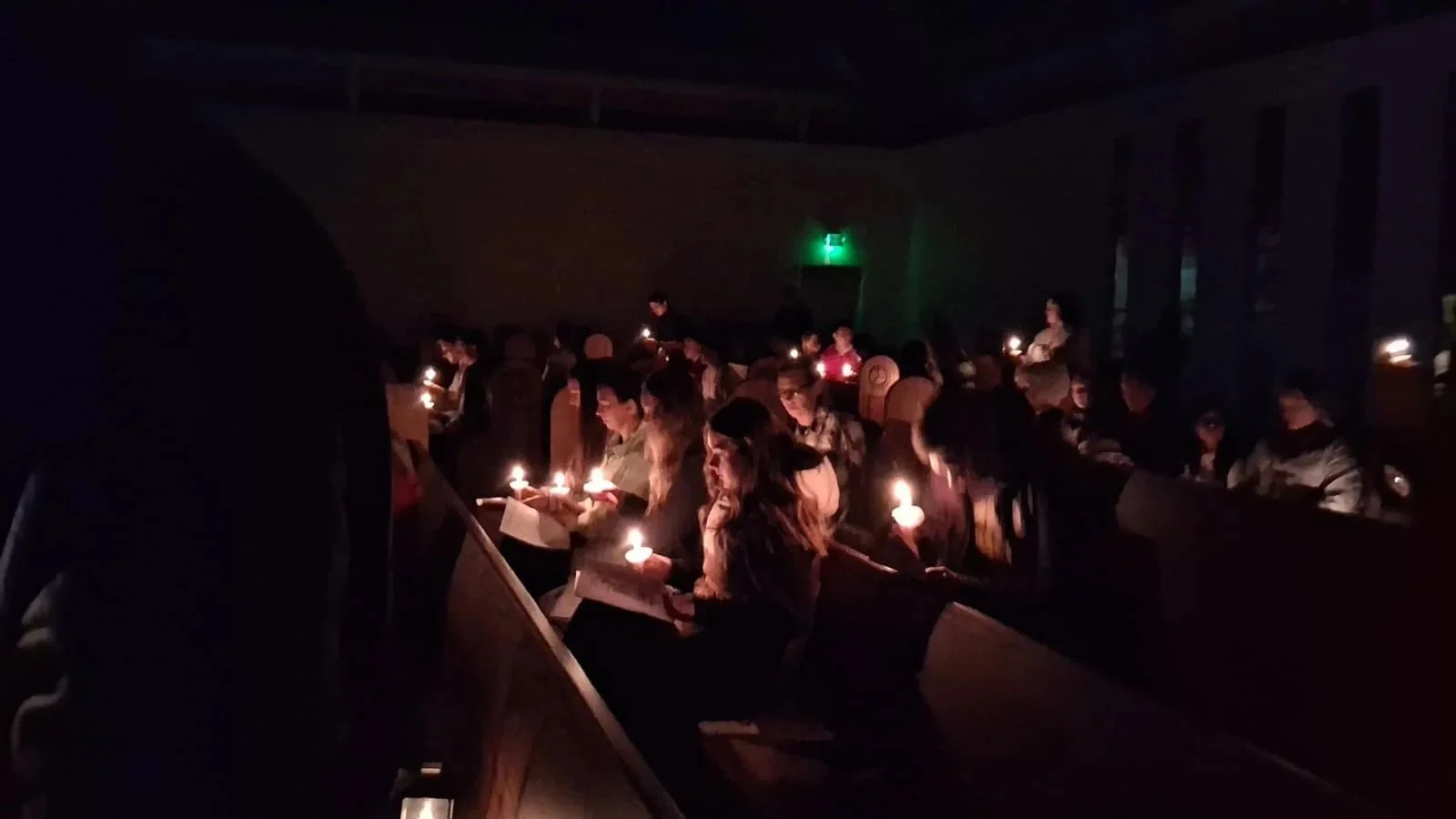
Tenebrae is the praying of Matins, Lauds, and the Lamentations traditionally celebrated before sunrise. The physical darkness of the hour reflects the spiritual darkness that the world is about to enter as Jesus is arrested, crucified, and buried. Darkness is a recurring theme in the Passion narrative of Judas’ betrayal (John 13:30), Jesus’ arrest in Gethsemane (Luke 22:53), and the death of Christ (Matthew 27:45, Mark 15:33, Luke 23:44-45). In the Bible, darkness is associated with disorder (Genesis 1:2) and God’s righteous judgement (Exodus 10:21-23, Isaiah 13:10-11, Amos 8:9, Zephaniah 1:14-15, Revelation 8:12) – appropriately looking towards Christ’s death on the Cross.
Tenebrae is prayed in the early morning
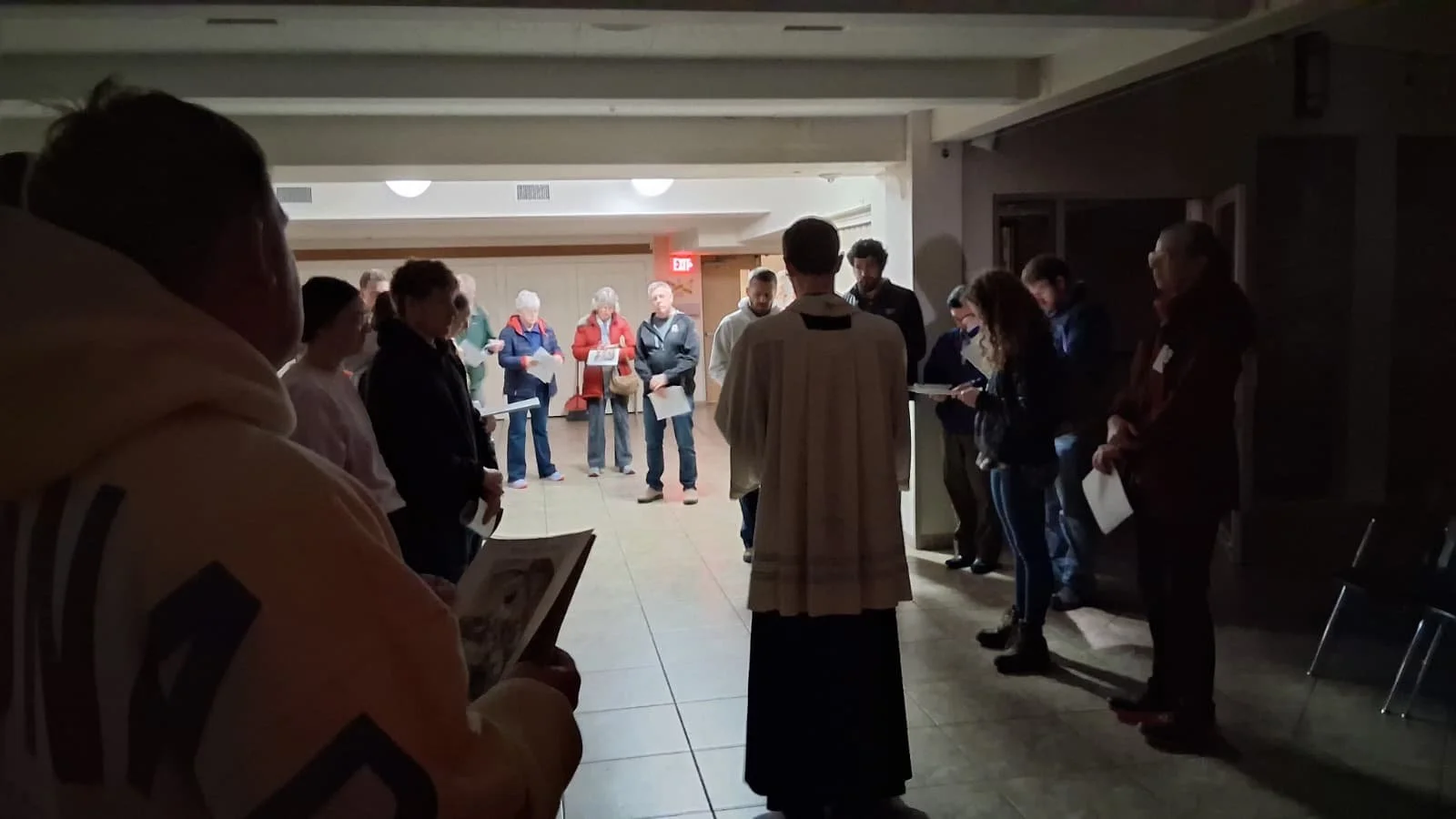
The Office of Readings (formerly known as Matins) is associated with the night-time vigils of Christian Monks who would rise to pray like the psalmist and the Apostles (Psalm 119:62, Acts 16:25). The formal practice of praying Matins and Lauds is codified in chapters 8-19 in The Rule of St. Benedict (480 AD – 547 AD) and alluded to in The Apostolic Tradition by St. Hippolytus of Rome (235 AD). “So could you not watch with me one hour? Watch and pray that you may not enter into temptation; the spirit indeed is willing, but the flesh is weak.” - Matthew 26:40-41
The Tenebrae Psalms are sorrowful, but express faith in God’s protection
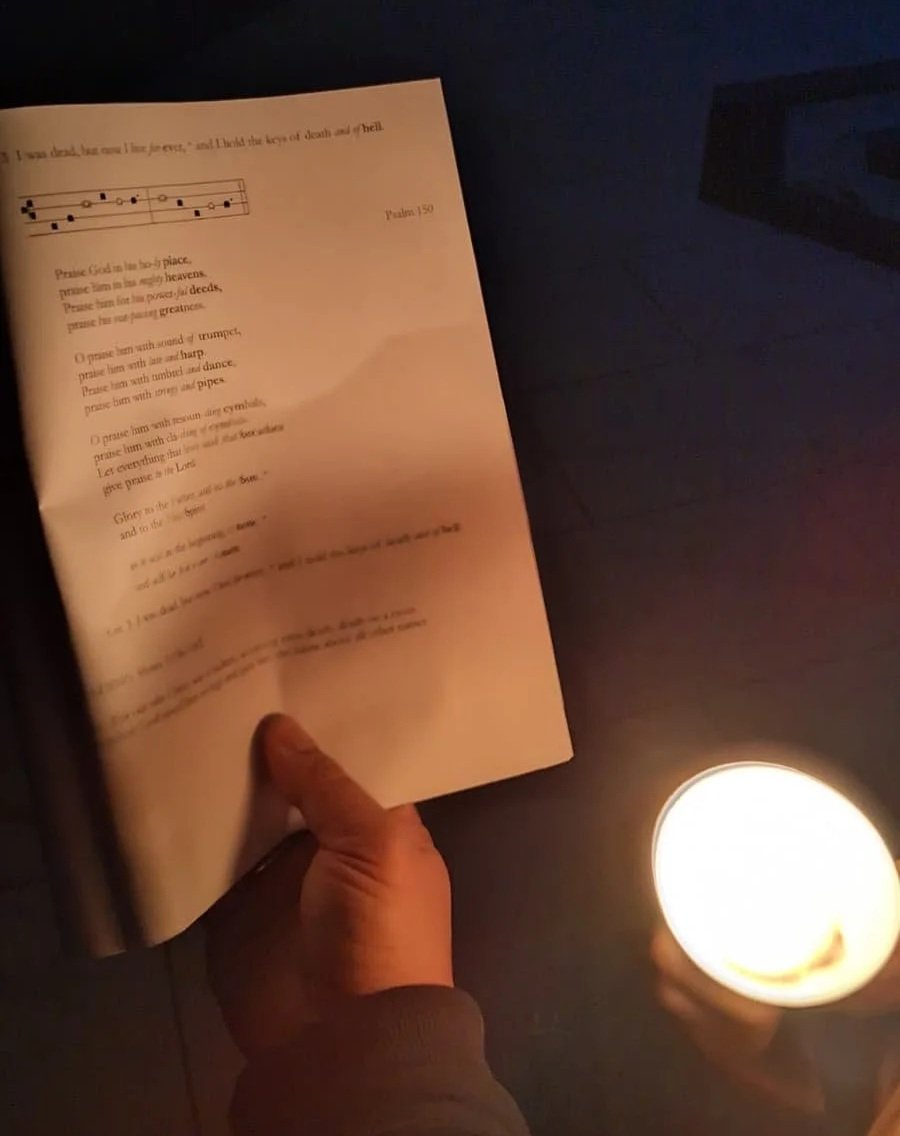
The Psalms are the most quoted Old Testament book in the Gospels - and for good reason. The Psalms point to a future deliverer who is fulfilled in Jesus Christ. The great beauty of the Psalms is in the raw honesty of the Psalmist. At times, he rejoices in God, and at others, he expresses deep grief, fear, and doubt. Good Friday’s Matins include Psalm 22, which Jesus quotes while hanging on the Cross (Psalm 22:1, Matthew 27:46, Mark 15:34). This Psalm also foreshadows the mockery of the crowd (Psalm 22:7-8, Matthew 27:39-42, Mark 15:29-32), and the soldiers casting lots for his garments (Psalm 22:18, Matthew 27:35, Mark 15:24, Luke 23:34, John 19:23-24). Despite the sorrow and horror, the Psalmist does not submit to despair - the second half of the Psalm expresses his confidence in the goodness of God.
“Behold, my servant shall prosper, he shall be exalted and lifted up, and shall be very high. As many were astonished at him - his appearance was so marred, beyond human semblance...”
The Biblical readings portray the paradox of Jesus’ life and death
The readings during Matins are taken from the Letter to the Hebrews and meditate on Jesus’ dual role as both the priest and sacrifice to take away the sins of mankind. The human priests of the Temple and the burnt offerings imperfectly prefigure the coming of Jesus Christ - the perfect priest and sacrifice who takes away the sins of the world. The readings of Lauds reflect the Passion of Christ through Isaiah’s Suffering Servant, (Isaiah 52:13-15) the return of repentant Israel, (Hosea 6:1-2) and how the agony of Crucifixion prepared the way for Jesus’ glory (Hebrews 2:9-10).
“Something strange is happening - there is a great silence on earth today, a great silence and stillness. The whole earth keeps silence because the King is asleep.”
Tenebrae features the writings of the Church Fathers
The Church Fathers were Christian theologians, philosophers, and writers who helped develop the intellectual and doctrinal beliefs of Christianity. St. Melito of Sardis teaches that Jesus is prefigured in the righteous suffering of the Patriarchs and Prophets of the Old Testament, and that He bears the world’s suffering on our behalf. St. John Chrysostom cites the blood and water which flows from Jesus’ pierced side (John 19:34-35) and teaches of the salvific power of Christ’s Blood in the Eucharist and of Christ’s forgiveness in holy baptism. Lastly, an anonymous homilist writes of the “Harrowing of Hell” and portrays a story of Jesus breaking down the gates of Sheol to rescue the souls Adam and Eve, and of all the righteous men and women who had died before his coming.
“We mourn with Jeremiah and enter the reality of the Cross for an hour - not even a whole hour.”
The Lamentations of Jeremiah and sorrow for our sins
The Book of Lamentations is a short grouping of five poems that detail the suffering of Jerusalem during and after the Babylonian Siege of Jerusalem (587 BC). The Book is associated with the Prophet Jeremiah and portrays the besieged city of Jerusalem as a suffering widow, reflects on the just wrath of God, and compares the former glory of Jerusalem to the current state of misery. The Lamentations are referred to as “Lessons” in the context of Tenebrae and are chanted after the psalms of Matins.
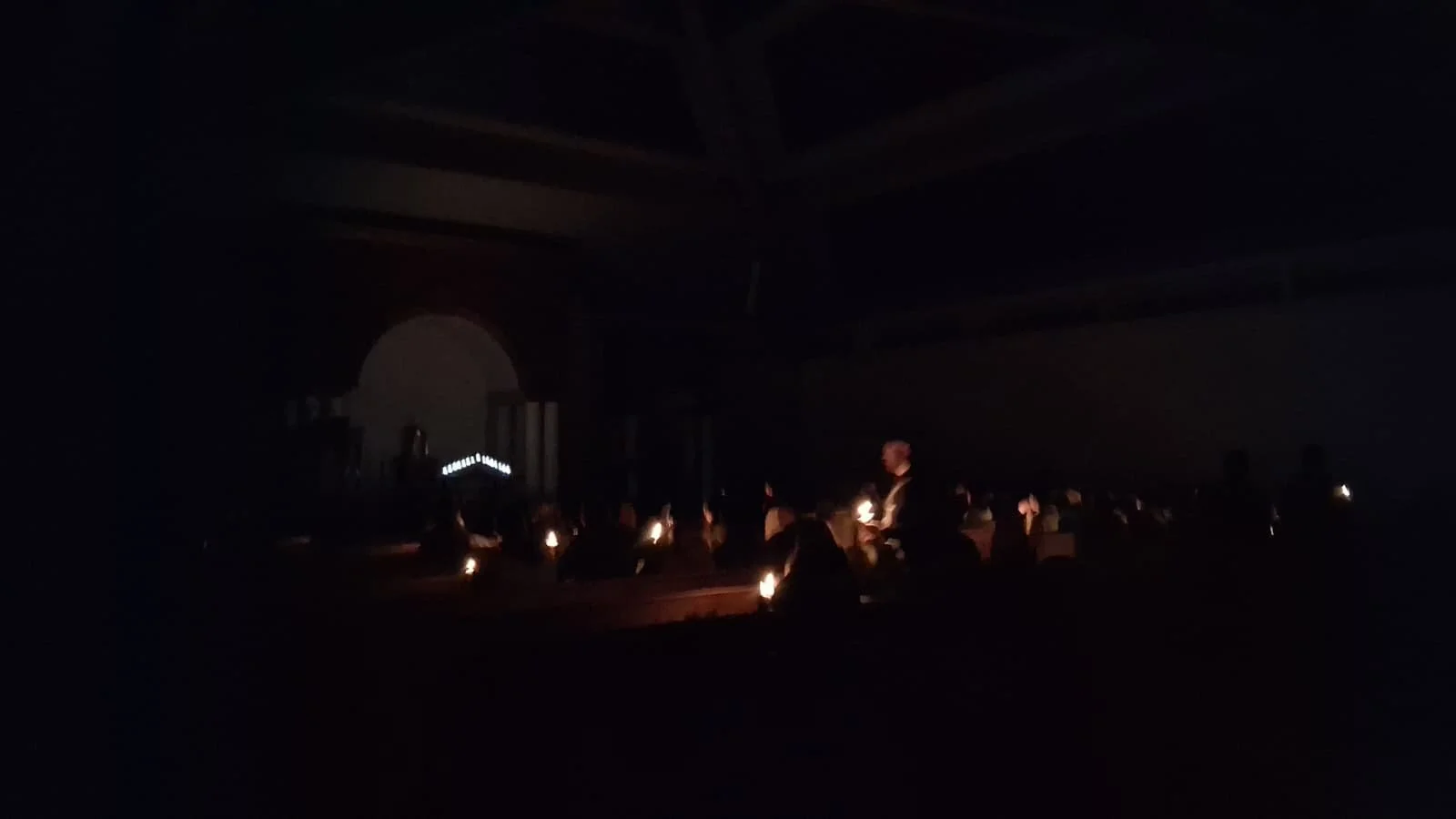
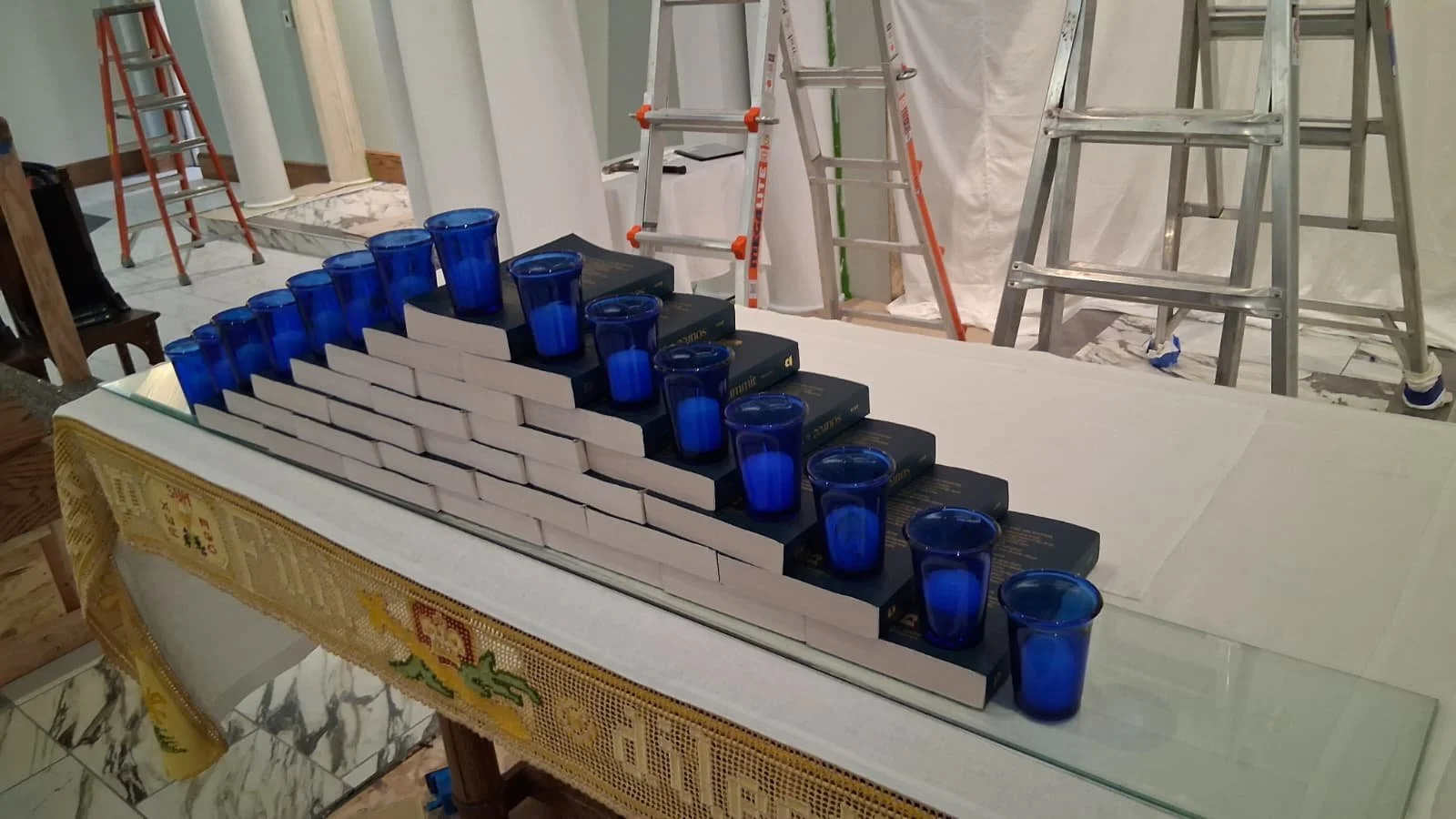
The triangular candelabra is called a Tenebrae Hearse
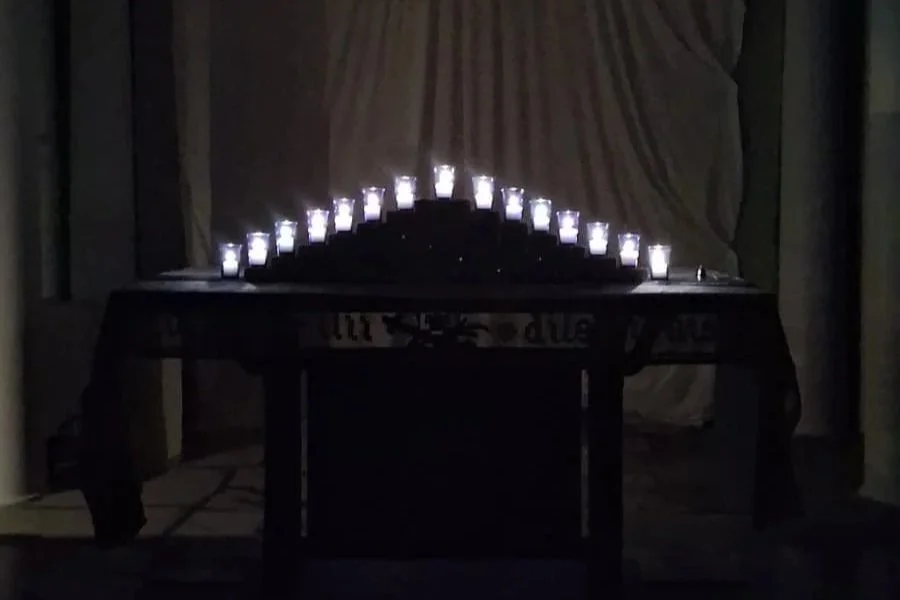
A defining feature of Tenebrae is the large 15-candle stand that shines in the darkness. As each Psalm, poem, and reading is chanted, a candle is extinguished plunging the room deeper into darkness. After praying the Benedictus, (Luke 1:68-79) one lit candle remains and all participants extinguish their lights. The remaining candle is then hidden from view, plunging the room into complete darkness. This represents the death of Christ and his departure from the world.
Make a loud noise!
The Synoptic Gospels describe the Crucifixion with darkness covering the land, and an earthquake (Matthew 27:45-54, Mark 15:33-39, Luke 23:44-46). To represent this, worshipers bang on pews and stomp their feet to create a rumbling sound in the darkness – this banging is referred to as the “Clamor” or the “Strepitus”. The noise ends when the remaining candle is replaced on top of the hearse, foreshadowing the return of the Light with Christ’s Resurrection. The presider will then pray the concluding prayers, and the worshipers exit the church in silence.
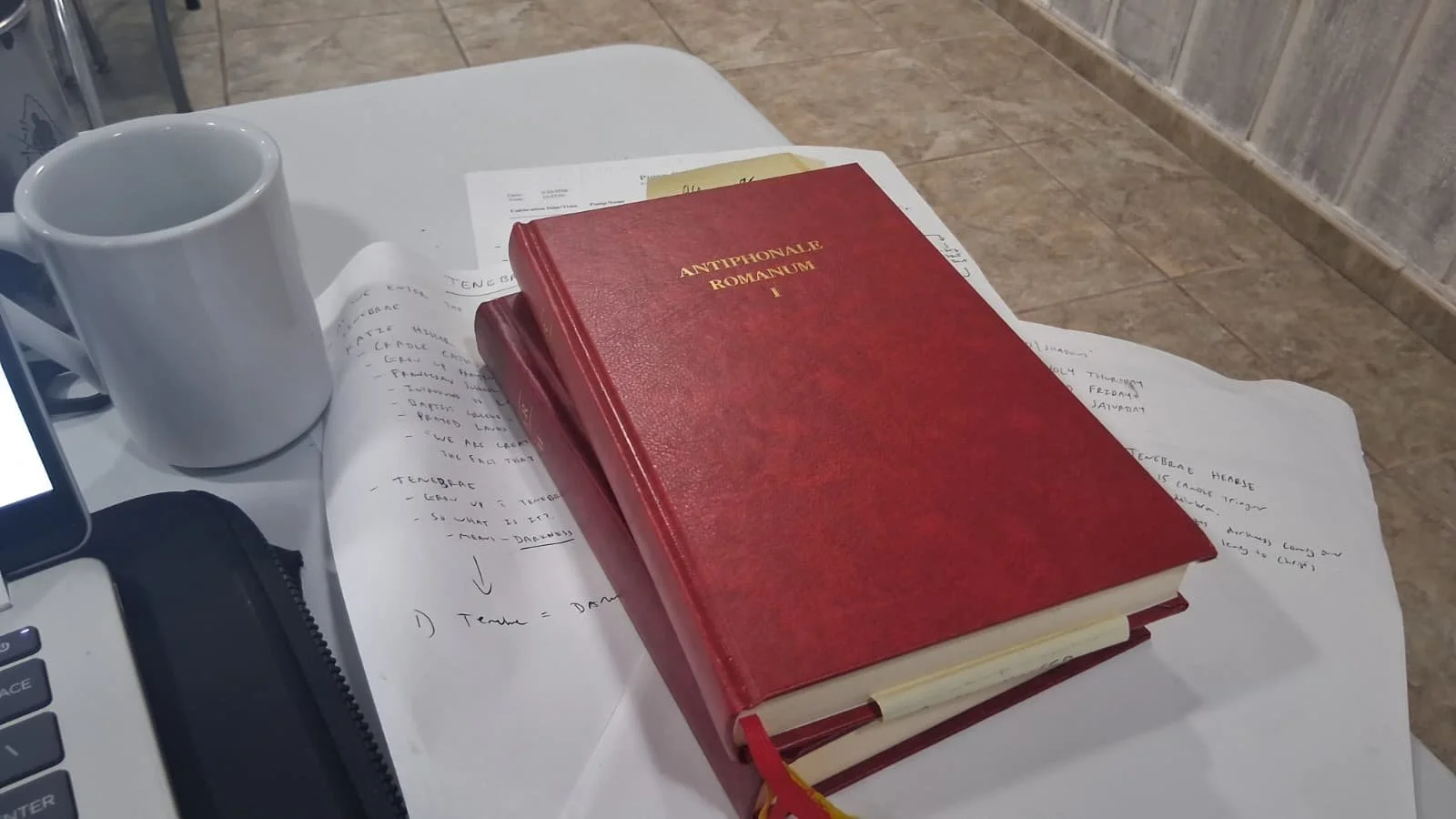
Finding the chants
While it is perfectly fine to recite the psalms and readings, Liturgy of the Hours was originally meant to be chanted. Chant tones can easily be found in the Antiphonale Romanum or online by looking up the Murray Tones, Gregorian Tones, Bevenot Tones, or the St. Meinrad Tones to name a few. For those interested in chanting the Lamentations, the Liber Usualis has the Latin text and tones for chanting. As this website develops, I’ll have the chants posted in our Psalm Tones tab. As St. Augustine of Hippo (354 AD – 430 AD) supposedly said, “He who sings well, sings twice!”
Give it a try!
While Tenebrae is a distinctly Western Christian practice, it is not an exclusively Catholic liturgy. High Church Protestants such as the Anglicans, Lutherans, Methodists, and Reformed Churches have all retained Tenebrae in one form or another since the Reformation. Regardless of differences, I would encourage all followers of Christ to join or start a Tenebrae service to more deeply enter the season of the Passion.