Meet the Hours: A Brief Summary of Each Prayer
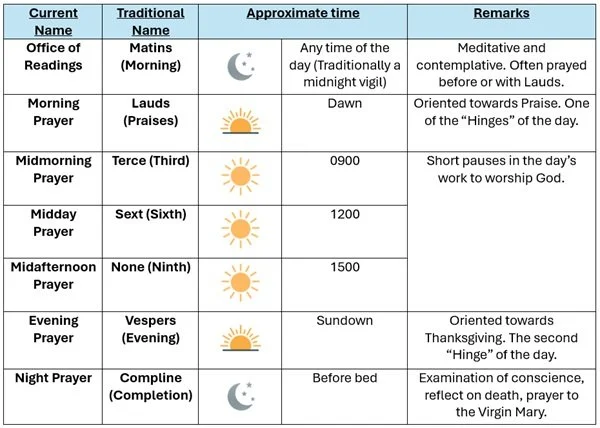
Just as different times of the day have distinct characteristics, so do the specific hours of the Liturgy. The Liturgy of the Hours is divided up into seven hours of prayer: Office of Readings, Morning Prayer, the three daytime prayers (Midmorning, Midday, and Midafternoon), Evening Prayer, and Night Prayer. The hours can be roughly categorized into major and minor hours based on the length of the prayer. The major hours include the Office of Readings, Morning, and Evening prayer. The minor hours are the Daytime hours and Night prayer. While each hour shares a similar basic structure (Introduction + Hymn + Psalms + Reading + Conclusion), they are each distinct in form and orientation. The seven hours of prayer reflects the Psalmist’s seven prayers per day (Psalm 119:164)
Office of Readings
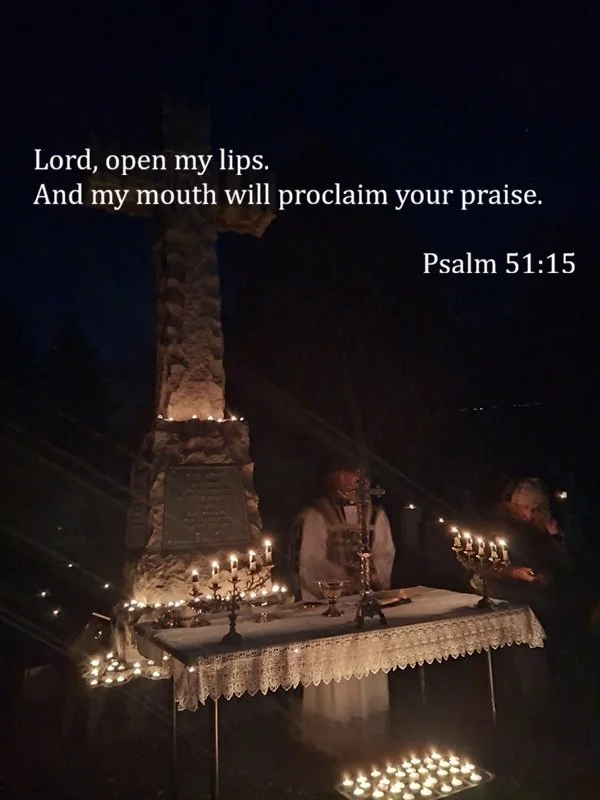
The Office of Readings – historically called Matins, is the longest of the hours and is characterized by lengthy readings and a meditative mood. It is traditionally prayed at night when monks would rise from sleep to stand watch - waiting for the return of Christ. With the modern rubric, however, this hour can be prayed at any time during the day.
If the Office of Readings is the first hour to be prayed in the day, it begins with the introduction, “Lord, open my lips, and my mouth will proclaim your praise.” (Psalm 51:15) followed by an antiphon and an invitatory Psalm (typically Psalm 95). The rest of the hour is composed of a hymn, three additional Psalms, and a lengthy reading from the Bible, followed by a non-Biblical spiritual work. On Sundays and Feast days outside of Lent and Advent, the ancient hymn, Te Deum, is sung.
Lauds
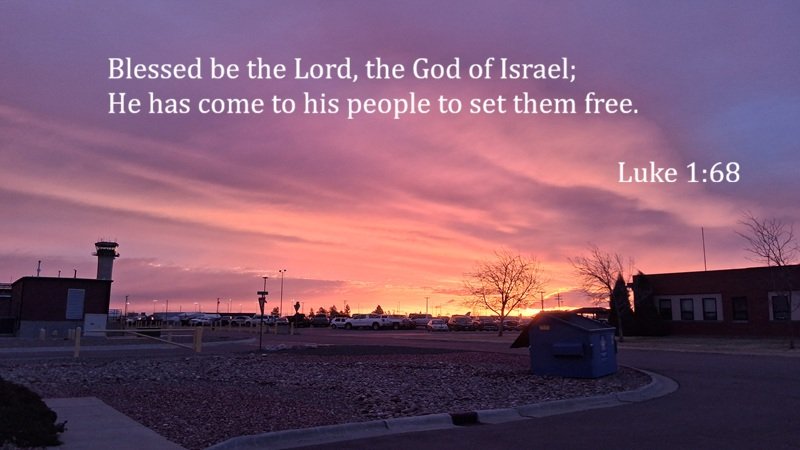
Morning prayer – traditionally know as Lauds (Praises) is meant to sanctify the morning and calls to mind the resurrection of Christ. This hour is composed of an introduction, “God, come to my assistance. Lord make haste to help me” (Psalm 70:1), a hymn, two Psalms, and an Old Testament Canticle, a reading from the Bible, a short responsory, a Gospel canticle, intercessory prayers, the Lord’s prayer, and a conclusion. The prayer is recited at the rising of the sun which represents the resurrection of Christ, and the rebirth of Creation. Due to its theological significance and depth, the Lauds is highly recommended to the laity and is considered one of the “Hinges” of the day’s prayers.
The Gospel canticle for morning prayer is the Benedictus (Luke 1:68-79), also known as the Song of Zechariah. The Benedictus references God’s faithful protection of the Israelites, King David’s promised heir, the fulfillment of Abraham’s covenant, and the salvation of the world.
Daytime Prayers
The daytime prayers (Midmorning, Midday, and Midafternoon) are the minor hours of the day. These times roughly correspond to 9:00AM, 12:00PM, and 3:00PM. Each hour marks significant events in the Gospels, especially in the Passion of Christ, and the Acts of the Apostles. These hours are short and are meant to be a brief pause from the day’s work to give thanks to God. It is composed of a short introduction, three short Psalms, a short reading, and a closing prayer.
Praying all three daytime hours is typically reserved for individuals who lead a contemplative life (like monks, nuns, and hermits). Those who are not obliged to pray all three of the daytime hours, may choose any one of the hours to celebrate. When all three hours are prayed, the complementary psalms are drawn from the Psalms of Ascents (Psalms 120-134).
Vespers
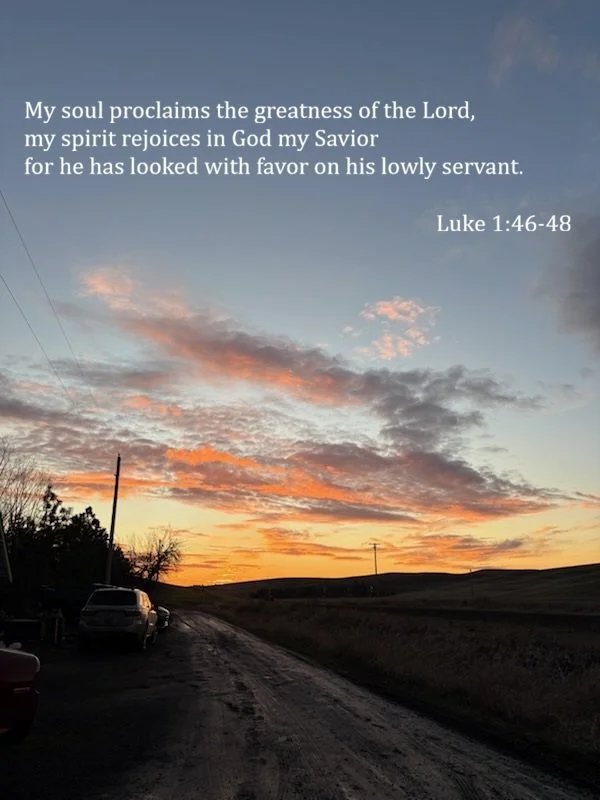
Evening prayer – more popularly known as Vespers, is oriented towards thanksgiving. Like Lauds, it is considered one of the “Hinges” of the day and follows nearly the same structure – an introduction, a hymn, two Psalms, and a New Testament Canticle, a reading from the Bible, a short responsory, a Gospel canticle, intercessory prayers, the Lord’s prayer, and a conclusion. Vespers commemorates both the Old Testament evening sacrifice (Psalm 141:2) and the sacrifice of the New Covenant – the Last Supper (Matthew 26:20, Mark 14:17). This commemoration bestows a special significance to this hour, and the Church recommends that Vespers be prayed in common during Feasts and Sundays.
The Gospel canticle for Vespers is the Magnificat – the Song of Mary (Luke 1:46-56). This song glorifies God, extolls his power in Mary’s humility, references God’s protection for the weak, and celebrates the fulfillment of Abraham’s covenant. It is remarkably similar to the Song of Hannah where Hannah praises God for the birth of her own miraculous child (1 Samuel 2:1-10).
Compline
The final prayer of the day is night prayer, also called Compline. This hour is distinct in its brevity and unique structure. The office is structured as follows – an introduction, an examination of conscience/penitential act, a hymn, psalmody, Biblical reading, a responsory, Gospel Canticle, prayer, conclusion, and a Marian Antiphon. The psalmody of night prayer is composed of one or two psalms that are prayed over a one-week cycle. Compline is designed to be a short prayer that encourages reflection and confidence in God’s protection.
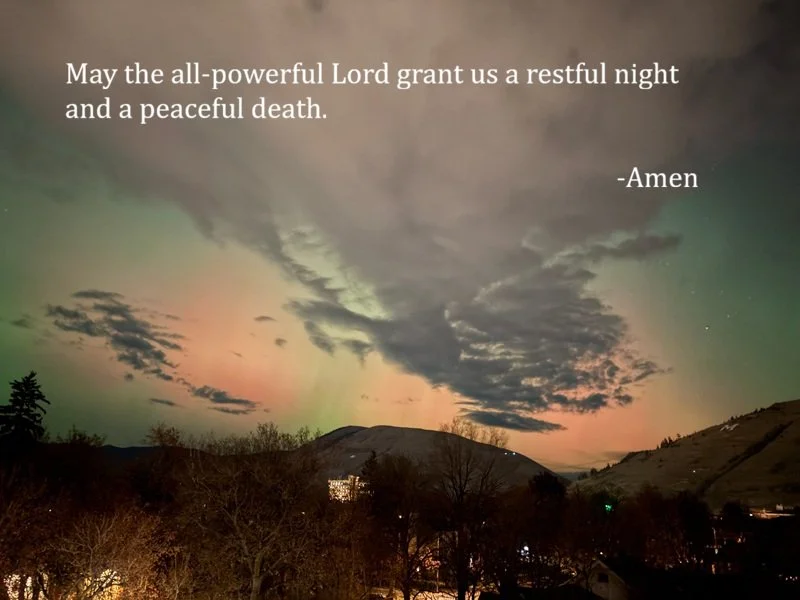
The Gospel canticle for night prayer is the Nunc Dimittis – the Song of Simeon (Luke 2:29-32). This short canticle meditates on Simeon’s awe upon seeing the infant Jesus, recognizing Him as the Savior of the World. The song references God’s fulfillment of his promise to make himself known to all nations. The hour ends with the memento mori: “May the all-powerful Lord, grant us a restful night and a peaceful death”, and a sung prayer to the Virgin Mary (aka Marian Antiphon). Just as sunrise is reminiscent of resurrection, sleep is a reminder of death and our faith in God’s protection.
In Conclusion
The Liturgy of the Hours is an incredible way to enter the prayer of the Church. It sanctifies the hours of the day and continually makes space to remember God and sing his praises. If you are looking for places to start, I will post resources and links to the daily prayers. God Bless you.