St. Meinrad Psalm Tones

From left to right: Fr. Chrysogonus Waddell OCSO, Fr. Columba Kelly OSB, Fr. Samuel Weber OSB, and Fr. Tobias Colgan OSB.
The St. Meinrad Psalm Tones were developed by the Benedictine monks of St. Meinrad Archabbey in Southern Indiana. Following the Vatican II liturgical reforms, both the Mass and Liturgy of the Hours were translated from Latin into the vernacular languages. While the old Latin breviary broke the Psalms into couplets that could easily be chanted with traditional Gregorian chant tones, the new breviary included English stanzas that were 2-6 strophes long. This led the monks of St. Meinrad to develop a versatile 6-measure tone for each of the Gregorian modes.
In 1970, the monks began working on these new tones and they were shortly adopted by many parishes in the Anglosphere. The tones are the work of four monks – Fr. Chrysogonus Waddell OCSO, Fr. Columba Kelly OSB, Fr. Samuel Weber OSB, and Fr. Tobias Colgan OSB.
How to Chant
St. Meinrad Tones are chanted like any other Psalm tone with a reciting tone, mediants, and a termination. Meinrad Tone 1 is color coded below to show the components of a chant tone.
Important terms!
Reciting tone: the main note of a chant.
Mediant: The last 2 or 3 syllables of a line (measure)
Termination: The end of the strophe
Strophe: a “Stanza” of the Psalms or Canticle. Strophes are typically 2-6 lines long.
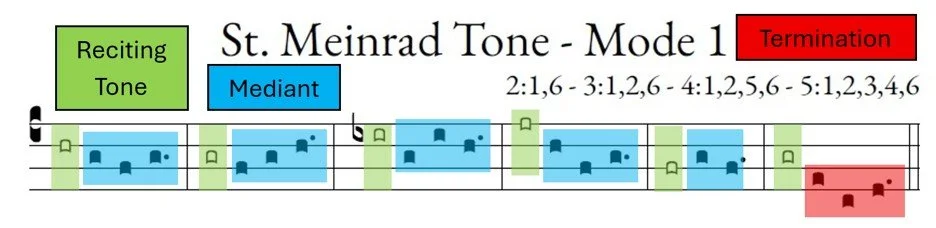
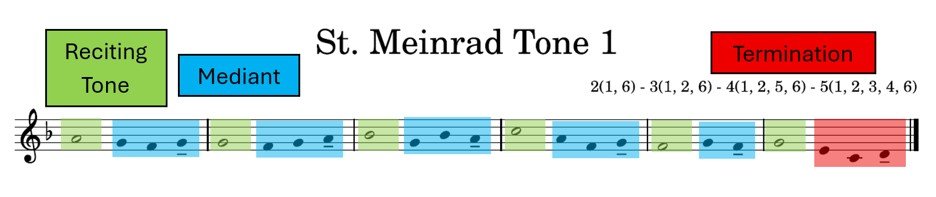
There are eight Meinrad Tones that correspond to each of the eight Gregorian Modes, and each tone is composed of 6 lines that can be adopted for strophes of varying length. For example, Meinrad Tone 5 is shown below.
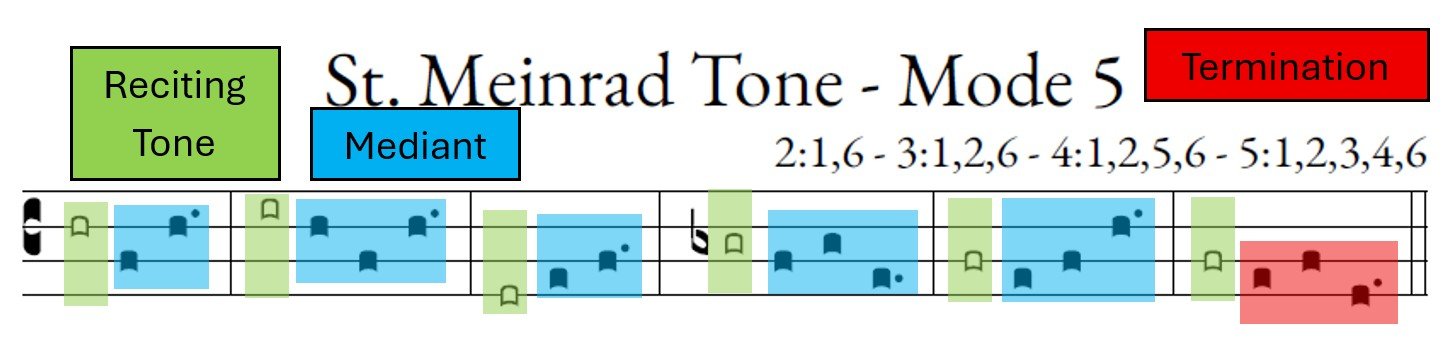
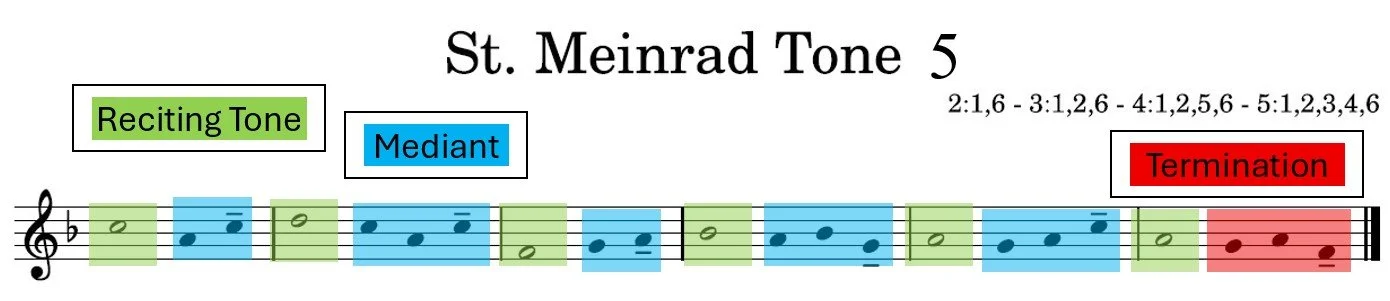
Notice the series of numbers on the upper-right corner of the music. This “cheat sheet” indicates what measures to use for strophes of varying lengths. Because of the built-in variations, Meinrad Tones have a greater variety and complexity than the Bevenot, Jones, or Murray tones.
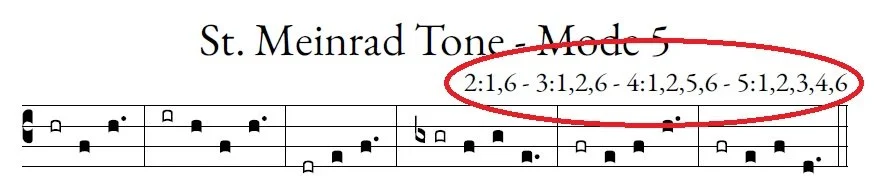
Here is the cheat sheet for Meinrad Tone 5:
· A 2-line strophe will use measures 1 and 6
· A 3-line strophe will use measures 1, 2, and 6
· A 4-line strophe will use measures 1, 2, 5, and 6
· A 5-line strophe will use measures 1, 2, 3, 4, and 6
· A 6-line strophe will use all the measures
Rules for a 2-line Strophe
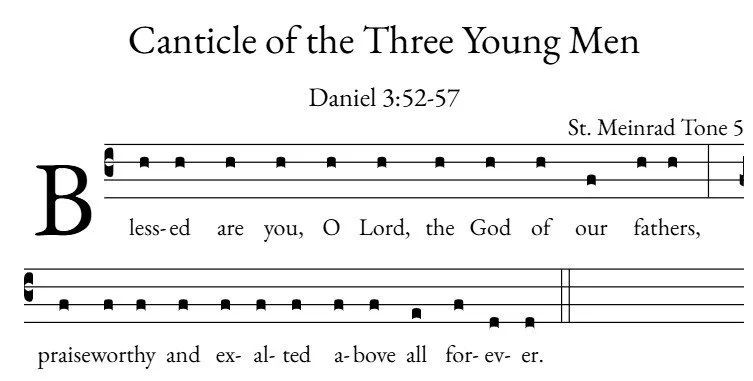
Below is an example of Tone 5 used in a 2-line strophe. Because this is a 2-line strophe, we will refer to the “cheat sheet” and sing with measures 1 and 6.
Blessed are you, O Lord, the God of our fathers,
praiseworthy and exalted above all forever.
Rules for a 3-line Strophe
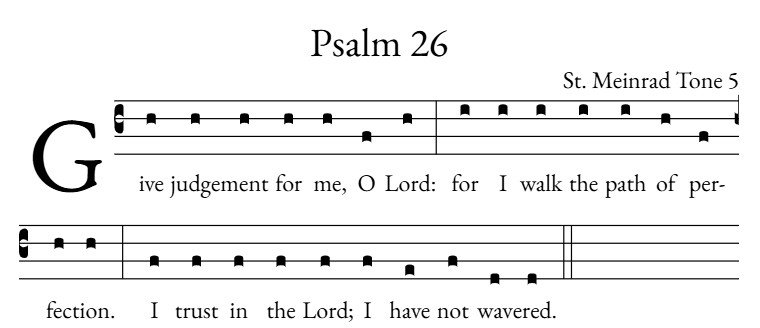
For a 3-line strophe, we will use the below example from Psalm 26. The cheat sheet indicates that we should use measures 1, 2, and 6.
Give judgement for me O Lord,
for I walk the path of perfection.
I trust in the Lord; I have not wavered.
Rules for a 4-line Strophe
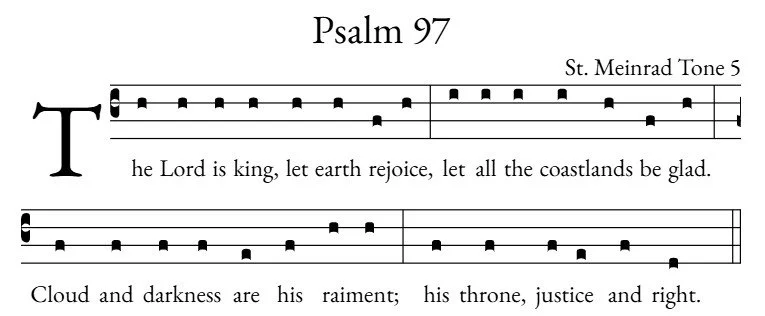
A 4-line strophe will use measures 1, 2, 5, and 6. Here is an example from Psalm 97.
The Lord is king, let earth rejoice,
let all the coastlands be glad.
Cloud and darkness are his raiment;
his throne, justice and right.
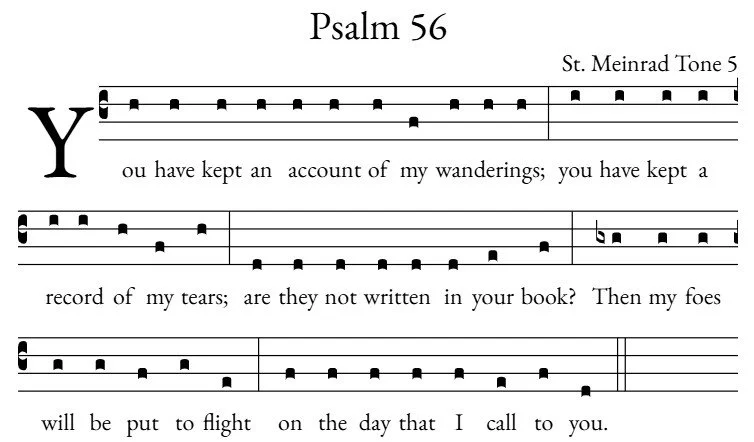
Rules for a 5-line Strophe
A 5-line strophe will utilize measures 1, 2, 3, 4, and 6.
You have kept an account of my wanderings;
you have kept a record of my tears;
are they not written in your book?
Then my foes will be put to flight
on the day that I call to you.
Rules for a 6-line Strophe
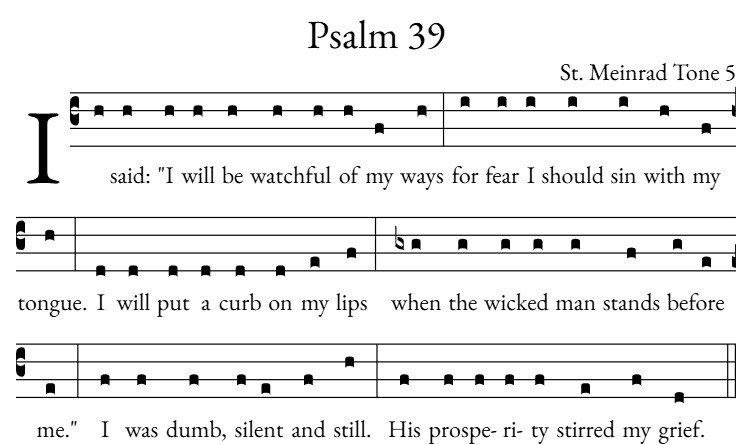
A 6-line strophe will use all measures in the tone.
I said: “I will be watchful of my ways
for fear I should sin with my tongue.
I will put a curb on my lips
When the wicked man stands before me.”
I was dumb, silent and still.
His prosperity stirred my grief.
A Word of Caution
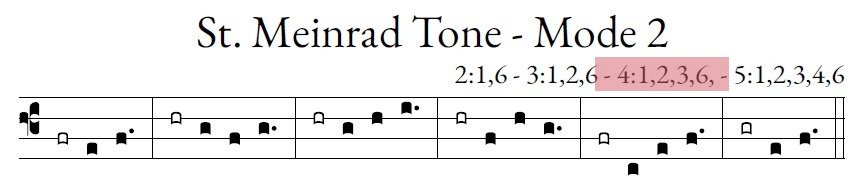
Not all the Meinrad Tones share the same “Cheat sheet” measures as evidenced by Tone 2. Notice that on a 4-line strophe, it calls for measures 1, 2, 3, and 6. Be sure to pay attention to the instructions on each tone and the chants will sound fine.
The 8 St. Meinrad Psalm Tones
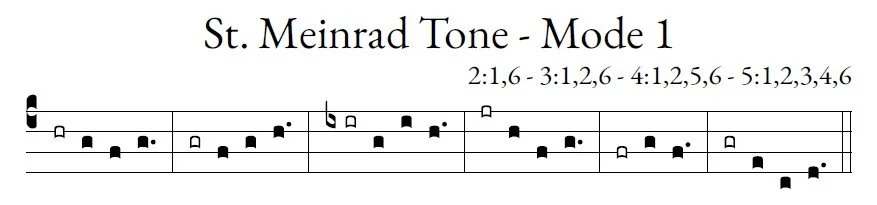
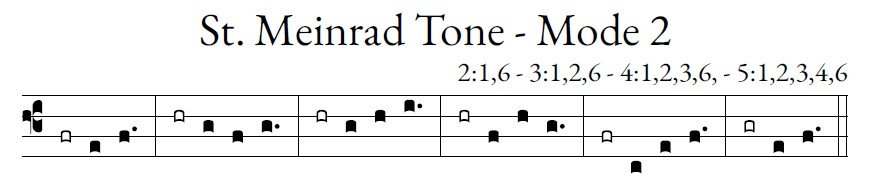
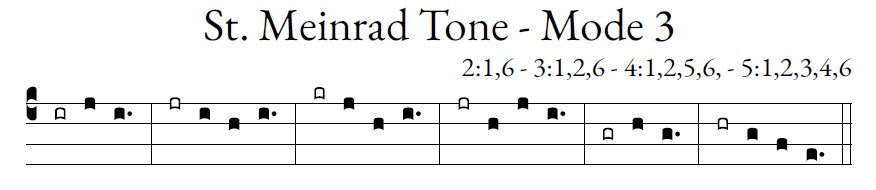
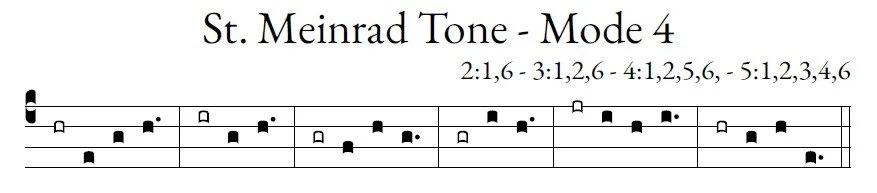
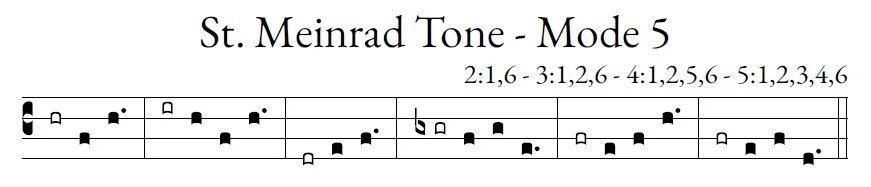
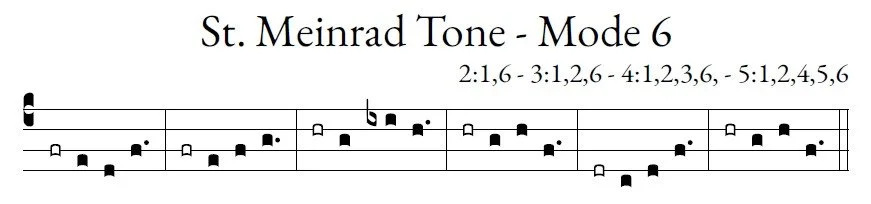
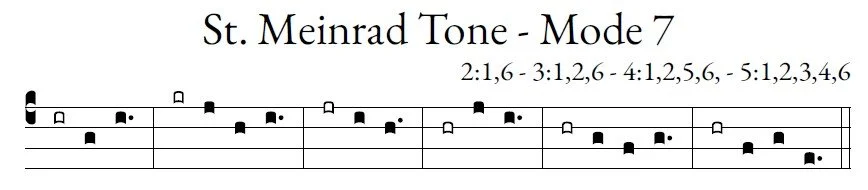
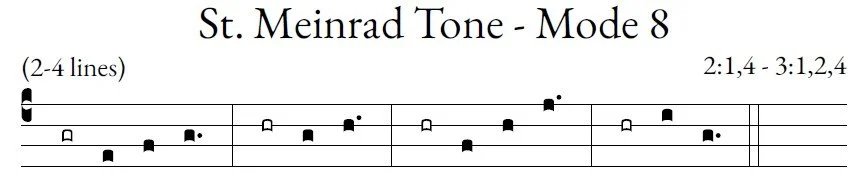
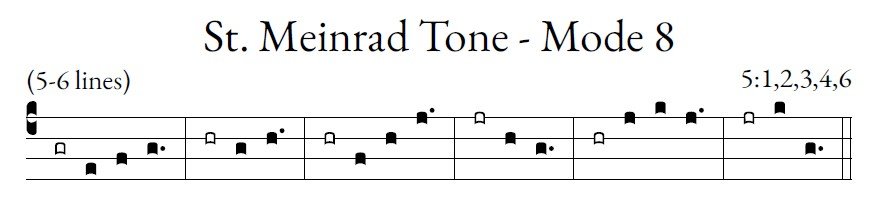
*Meinrad 8 is unique in that the 4th line of a 4-line strophe is different than the 4th line in a 5 or 6-line strophe.








