Bevenot Chant Tones

The following the liturgical reforms of the Second Vatical Council (1962-1965), the language of the Mass and re-vamped Liturgy of the Hours was translated from Latin into the vernacular language. In the Anglosphere, the Church recognized the need to adopt the chant tones to better suit English speech patterns, and wrote new, simplified tones to encourage greater lay participation in the Liturgy.
Dom Laurence Bevenot OSB (1901-1990) was born in England to a devout French Catholic family. He became a monk in 1919 at the Ampleforth Abbey and studied mathematics, theology, and philosophy. He was ordained a priest in 1928. As a lifelong lover of music, Fr. Bevenot wrote and taught music at the Abbey. Following the Second Vatical Council, he wrote masses and chant tones that balanced the Council’s vision of accessibility while remaining rooted in tradition. He died in 1990 and was buried in Ampleforth Abbey.
Parts of a Chant Tone
Each chant tones are divided into three main parts:
· The Reciting Tone
· The Mediant
· The Termination.
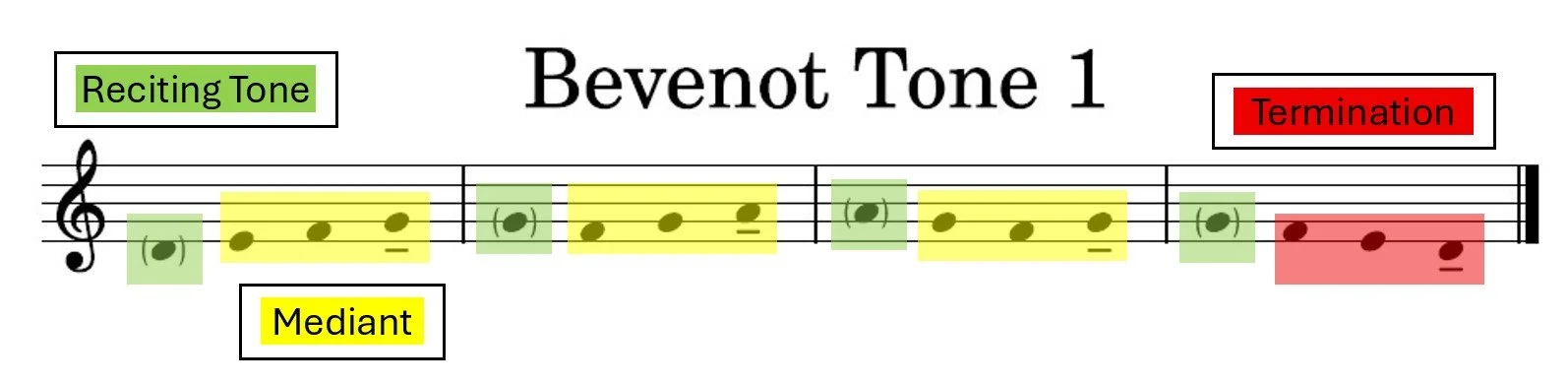
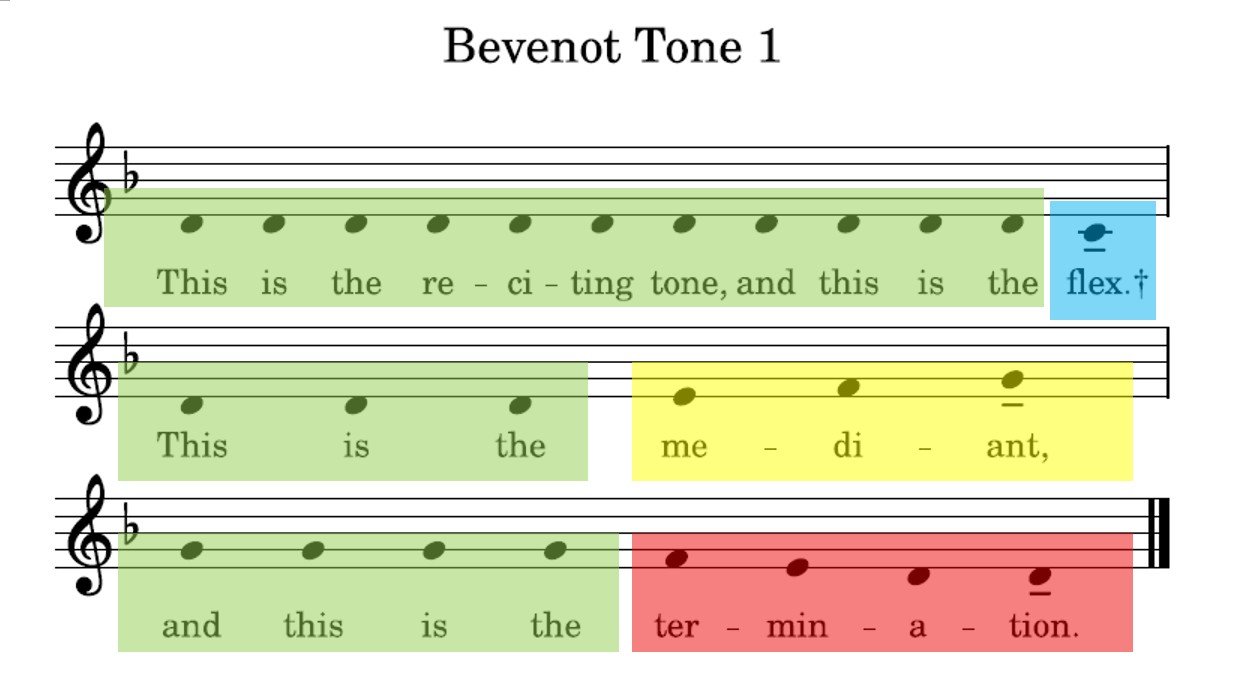
The reciting tone takes up most of a line and enables the singer to focus on the words of a passage rather than musical flourishes. When intoning a chant, start on the reciting note and chant the syllables on this note. The last three syllables of a line are the mediant. On the mediant, you change the pitch of the chant and bring the line to a close. The termination is the last three syllables of a strophe. Below is an example of Bevenot Tone 1 that illustrates the reciting tones, mediants, and termination.

Rules for a 4-line Strophe
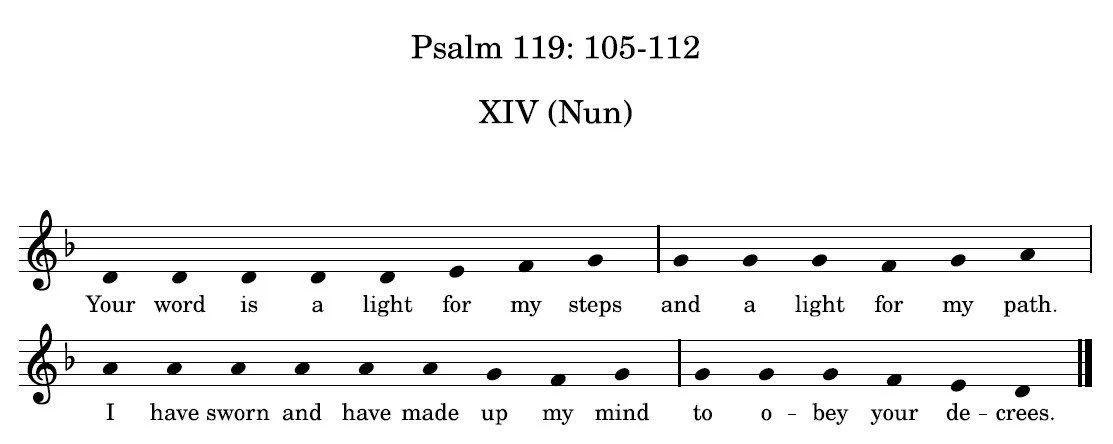
Most strophes in the modern Liturgy of the Hours are 4 lines in length. To sing these strophes, the words are often “pointed” – that is bolded or highlighted to indicate where the mediant begins.
For example, we have a 4-line strophe taken from Psalm 119.
Your word is a lamp for my steps
and a light for my path.
I have sworn and have made up my mind
to obey your decrees.
Rules for a 2-line Strophe
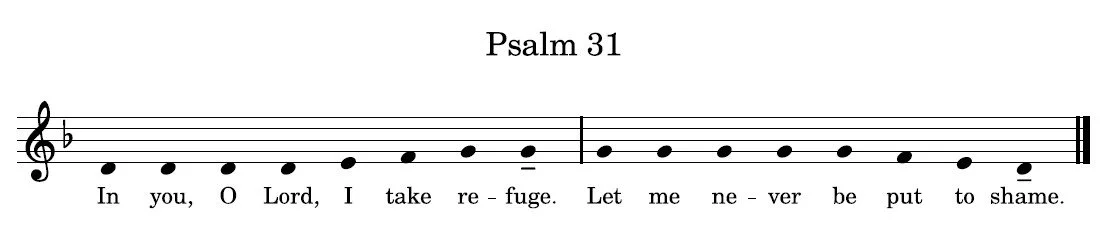
2-line strophes are also common in the Psalms. For Strophes of 2 lines, only the first and last measures of the tone are used.
For example, the first strophe of Psalm 31 is used below.
In you, O Lord, I take refuge.
Let me never be put to shame.
Rules for a 3-line Strophe
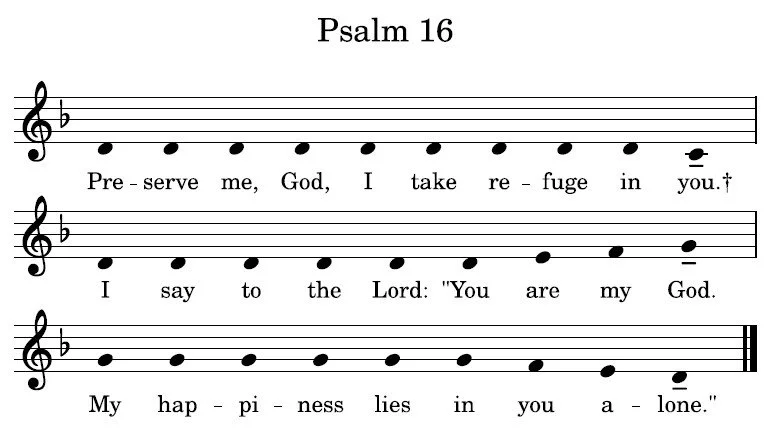
Occasionally, you will get a 3-line strophe. When this occurs, a flex is used. A flex is signified by a dagger symbol (†) and indicates that the last note should be a full step down from the reciting tone.
Below is an example from Psalm 16 using Bevenot Tone 1.
Preserve me, God, I take refuge in you. †
I say to the Lord: “You are my God.
My happiness lies in you alone.”
Rules for a 5-line Strophe
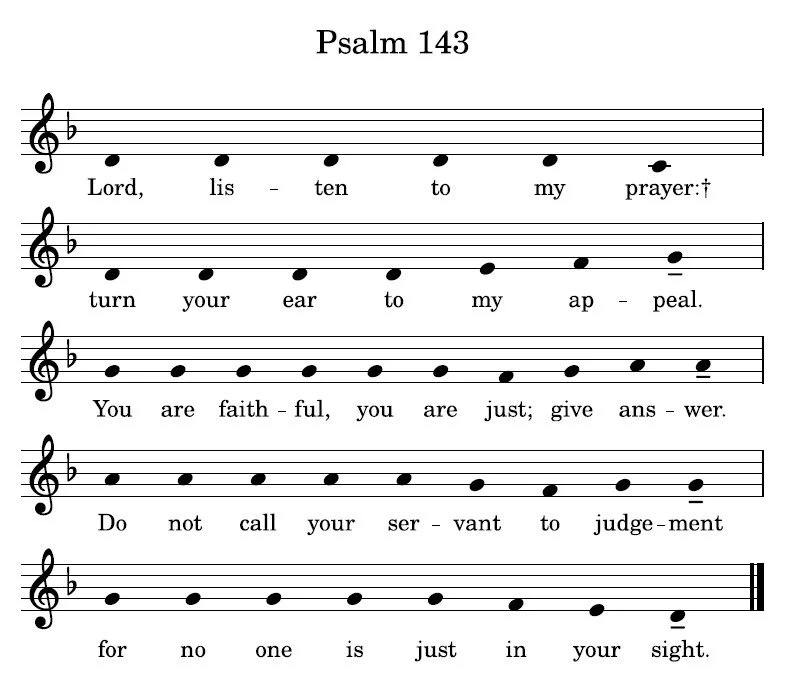
For a 5-line strophe, you can apply a flex to the first line and then chant the remaining lines like normal. Below is the first strophe of Psalm 143.
Lord, listen to my prayer:†
turn your ear to my appeal.
You are faithful, you are just; give answer.
Do not call your servant to judgement
for no one is just in your sight.