Jones and Murray Psalm Tones
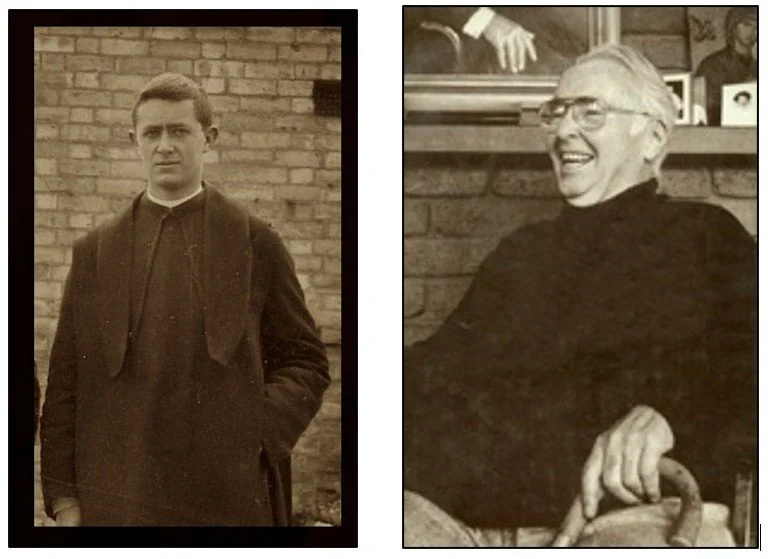
Dom Gregory Murray (Left), Fr. Percy Jones (Right)
The Liturgical reforms following the 2nd Vatican Council (1962-1965) changed both the Mass and the Divine Office substantially. The most significant change was the translation of the entire Psalter from Latin to the vernacular language. In the Anglosphere, the Church recognized a need to simplify the Psalm tones to encourage greater participation from the laity and adapt the tones to the English language. The resulting tones are simple and accessible to the average parishioner and are a great starting point for anyone interested in chant.
Dom Gregory Murray OSB (1905-1992) was a Benedictine monk of Downside Abbey in England. He entered the monastery at age 18 in 1923 and was ordained as a priest in 1932. An accomplished composer and organist, he contributed to several hymnals and wrote two books on Gregorian chant. He was a strong supporter of the vernacular language in Catholic worship and created the Murray Psalm Tones to encourage greater use of chant.
Fr. Percy Jones (1914-1992) was an Australian priest in the Diocese of Melbourne. In 1930, he studied music at Propaganda College, the Abbey of Solesmnes, and the Pontifical Institute for Sacred Music in Rome. In 1937, he was ordained as a priest. He published several hymnals during his service and developed the Jones Psalm tones to encourage greater lay participation in the Liturgy.
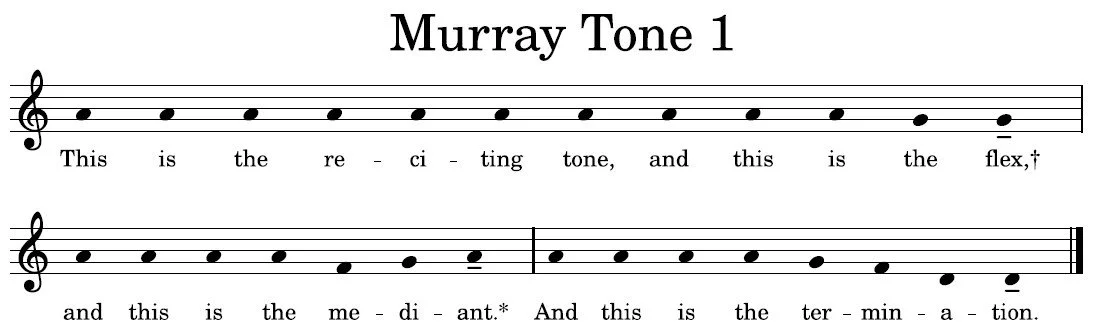
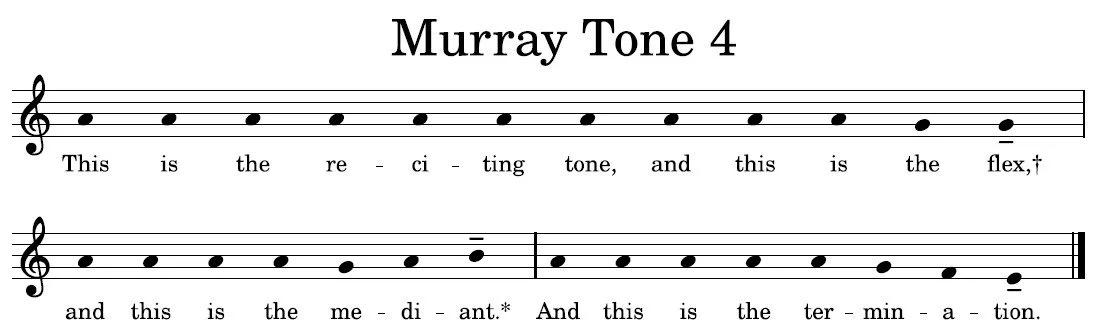
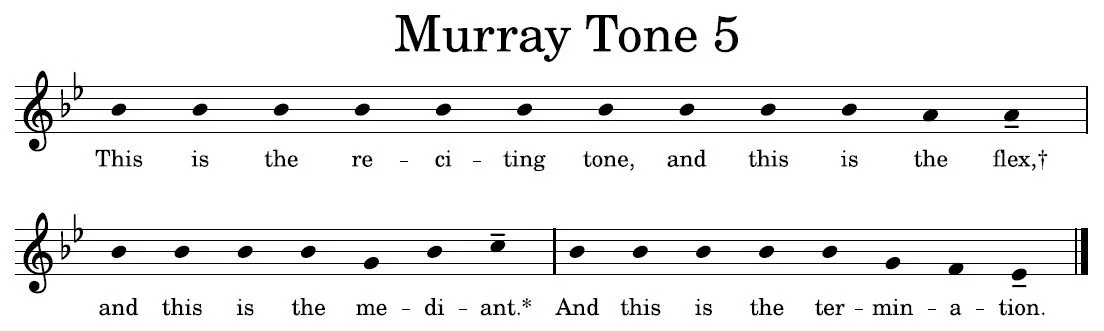
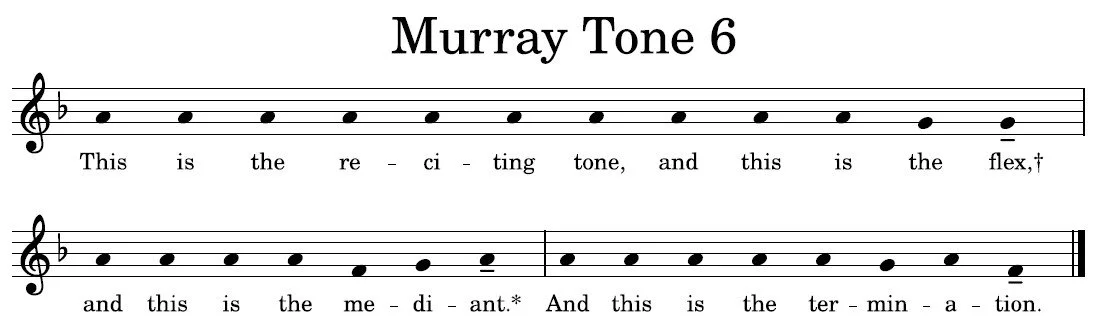
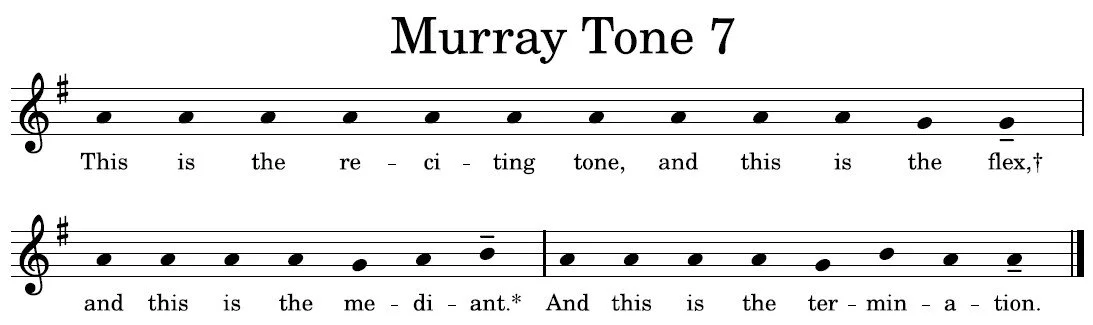
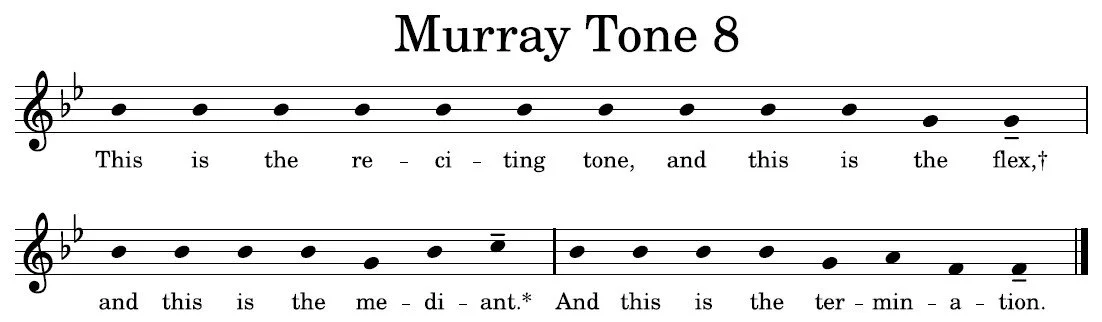
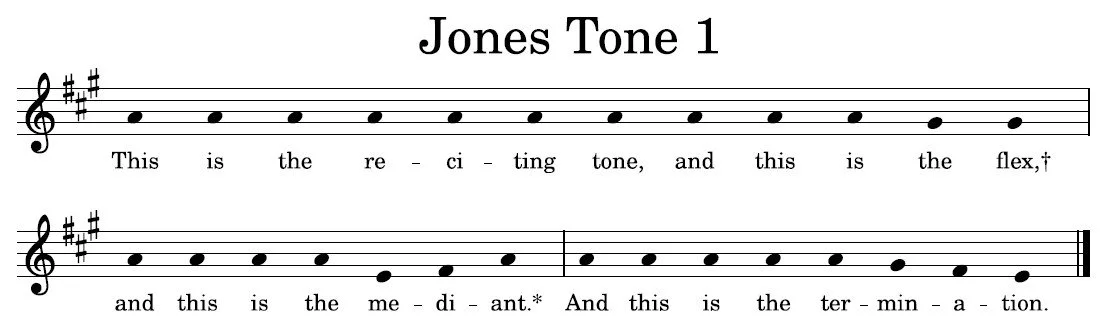
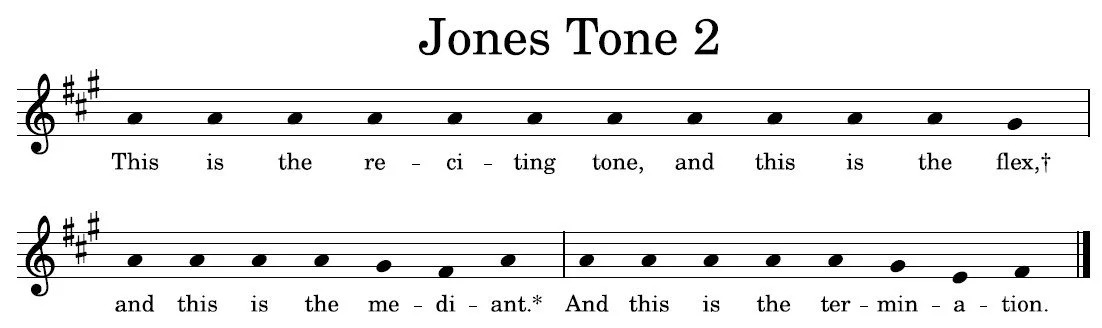
Each of the Tones are divided into four main parts:
· The Reciting Tone
· The Flex
· The Mediant
· The Termination.
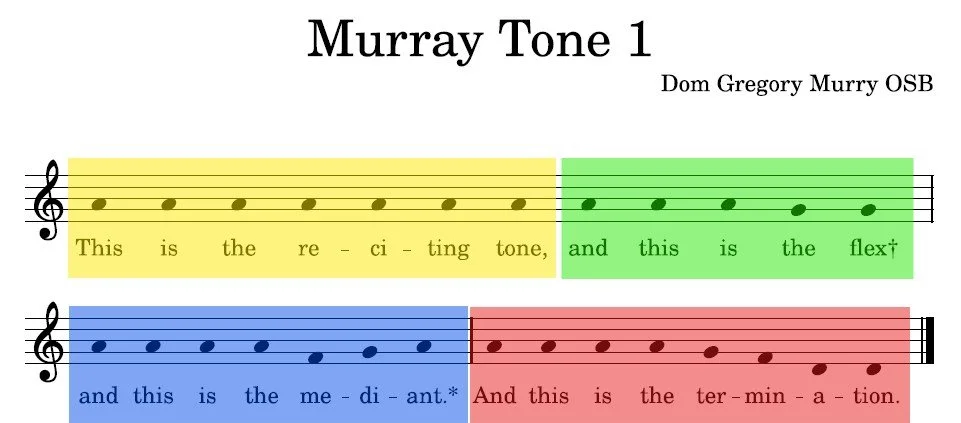
Even Numbered Strophes
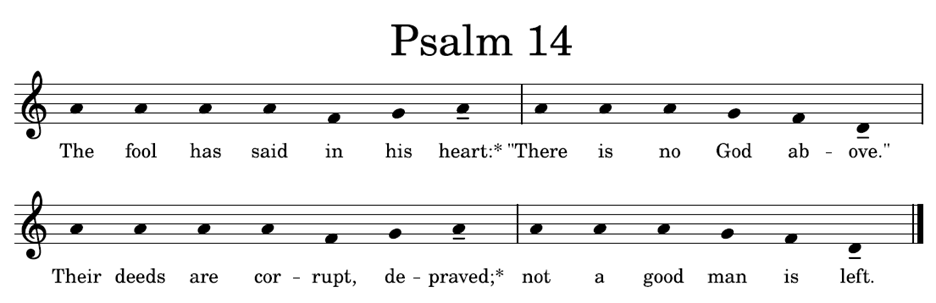
For strophes with even numbers, line 1 is composed of the reciting tone and the mediant, while line 2 is the termination. Mediants are typically marked with an asterisk (*).
Example: Psalm 14 (4-line strophe)
The fool has said in his heart:*
“There is no God above.”
Their deeds are corrupt, depraved;*
not a good man is left.
Odd Numbered Strophes
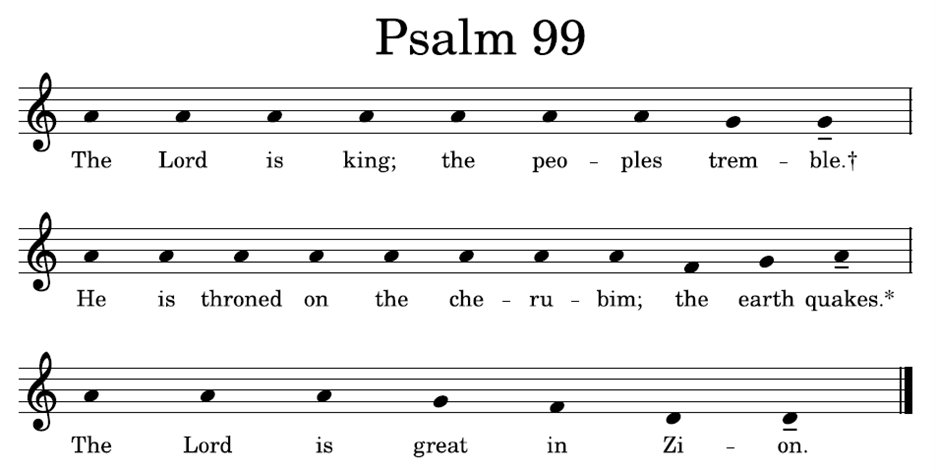
For a three-line strophe, the reciting tone and the flex is used for line 1. Line 2 is the mediant, and line 3 is the termination. A flex is indicated by a dagger symbol (†) and is typically a step or a half step down from the reciting tone.
Example: Psalm 99 (3-line strophe)
The Lord is king; the peoples tremble. †
He is throned on the cherubim; the earth quakes.*
The Lord is great in Zion.
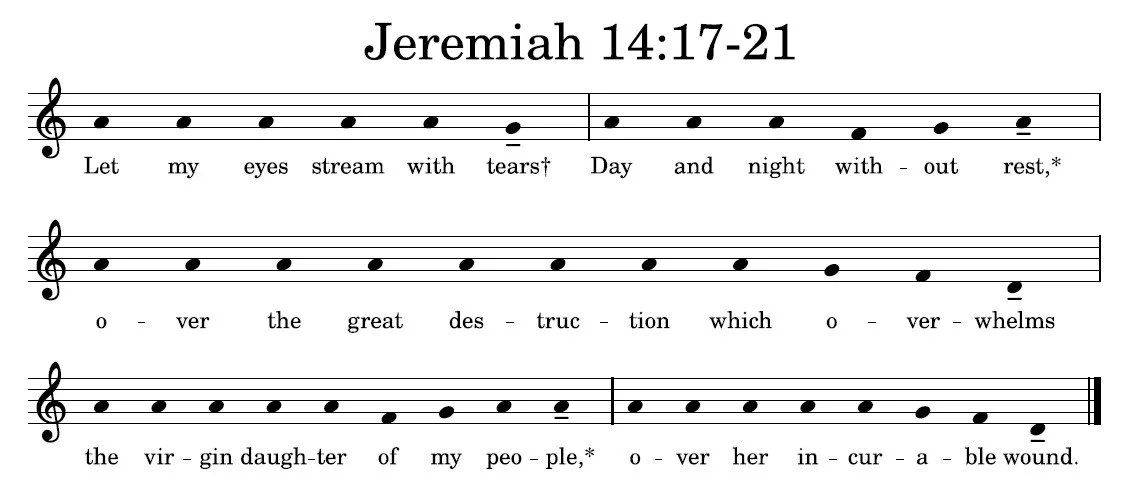
You can apply this rule to any odd-numbered strophe. For example, below is the first strophe of The Canticle from Jeremiah 14:17-21.
Let my eyes stream with tears †
day and night, without rest, *
over the great destruction which overwhelms
the virgin daughter of my people, *
over her incurable wound.
The Murray Psalm Tones
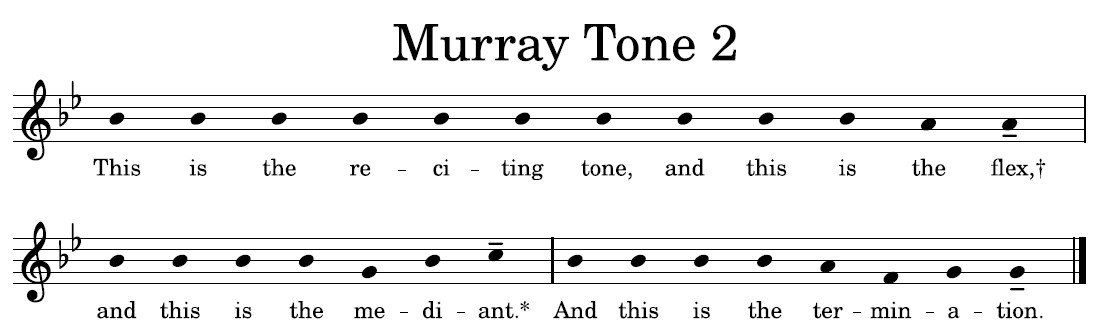
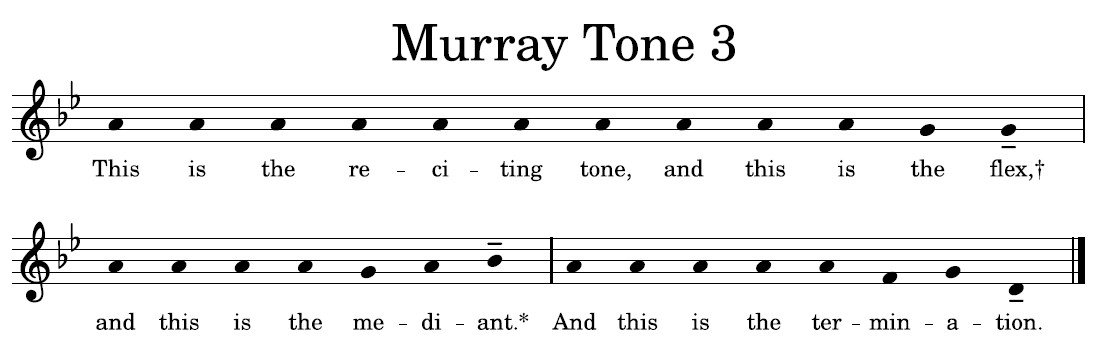
The Jones Psalm Tones
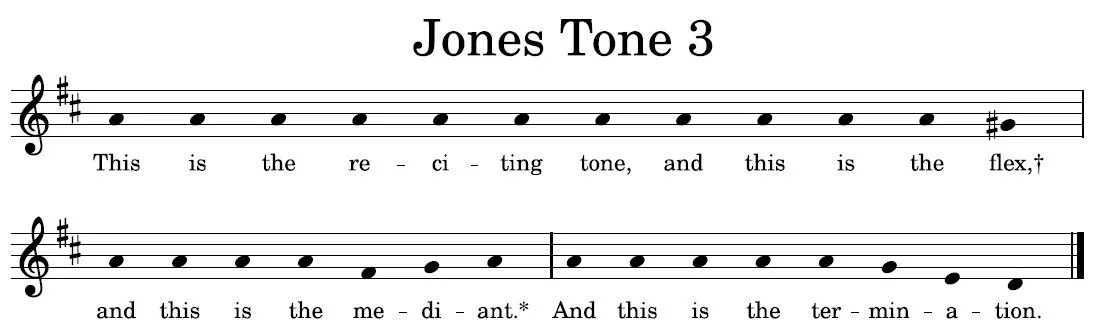
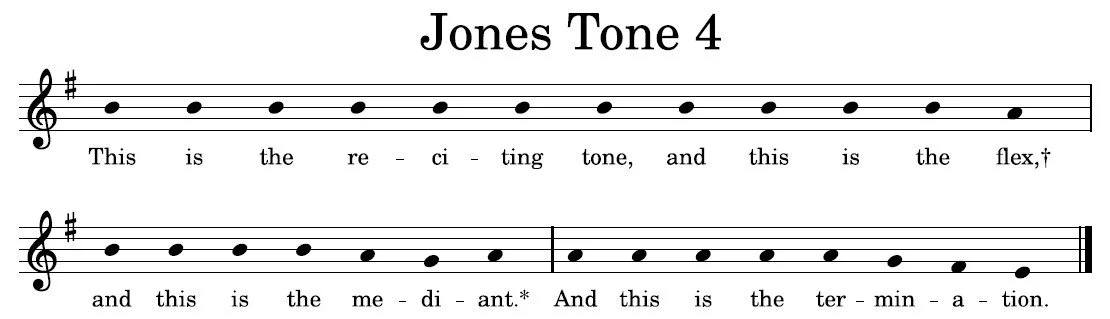
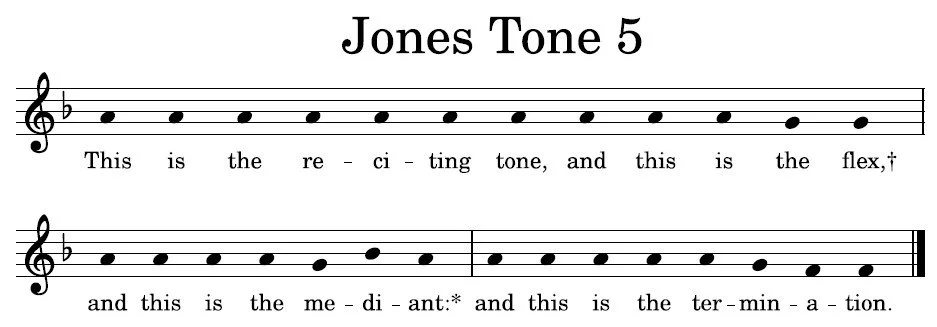
The Murray and Jones Tones are simple, intuitive, and easy to learn. I encourage you to try them out and use different tones for each psalm or canticle to keep the chanting interesting. God bless you.