Gregorian Chant Tones

The Gregorian chant tones are the traditional means of chanting the Psalms in Latin. Gregorian chant has its origins in the Early Middle Ages and according to pious tradition, Pope St. Gregory I received inspiration for plainchant from the Holy Spirit. In the 9th Century early music notation was developed to help teach and standardize the chants for the Liturgy. These early square-shaped notes are called neumes and are still used to write chants.
During the Renaissance, polyphony and instrumental music supplanted chant in the Mass up until the Protestant Reformation in the 16th Century. Following the Reformation, the Council of Trent reformed the liturgy and restored chant to a place of prominence. In the following centuries, chant again took a back seat to vernacular hymns and instrumental music until the early 19th Century. In the 1830s the Abbey of St. Pierre de Solesmnes embarked on a project to restore the old medieval chant – this project has made Solesmnes the modern authority on Gregorian Chant.
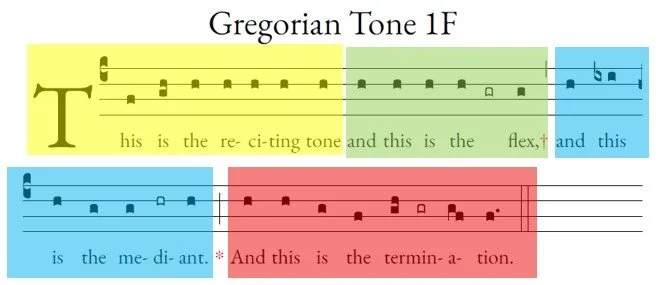
Parts of a Chant Tone
Each chant tones are divided into four main parts:
· The Reciting Tone
· The Flex
· The Mediant
· The Termination.
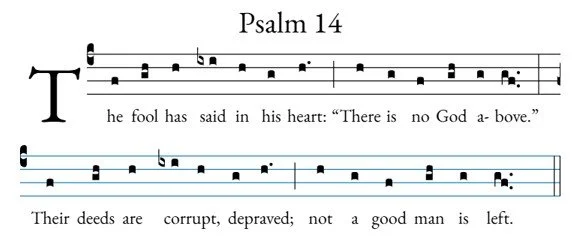
Even Numbered Strophes
For strophes with even numbers, line 1 is composed of the reciting tone and the mediant, while line 2 is the termination. Mediants are typically marked by an asterisk (*).
Example: Psalm 14 (4-line strophe)
The fool has said in his heart: *
“There is no God above.”
Their deeds are corrupt, depraved; *
not a good man is left.
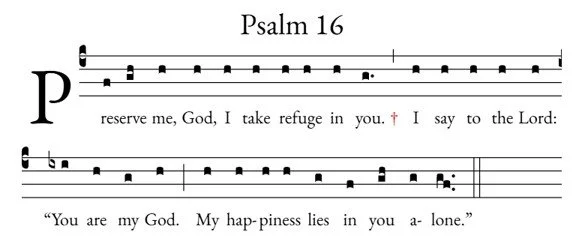
Odd Numbered Strophes
For three-line strophes, the reciting tone and the flex is used for line 1. Line 2 is the mediant, and line 3 is the termination. A flex is indicated by a dagger symbol (†) and is typically a step or a half step down from the reciting tone.
Example: Psalm 16 (3-line strophe)
Preserve me, God, I take refuge in you. †
I say to the Lord: “You are my God.
My happiness lies in you alone.”
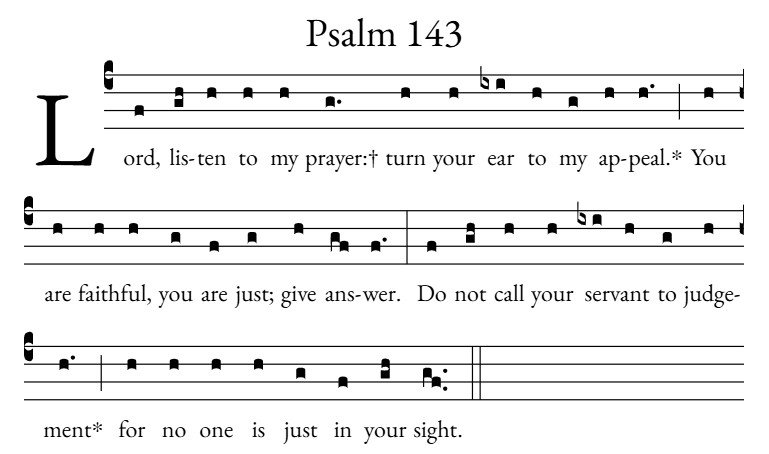
You can apply this rule to any other odd-numbered strophe. Below is the first strophe of Psalm 143.
Lord, listen to my prayer:†
turn your ear to my appeal.*
You are faithful, you are just; give answer.
Do not call your servant to judgement*
for no one is just in your sight.
The Gregorian Psalm Tones
Below are the 8 Gregorian Psalm Tones as well as the Tone Peregrinus.
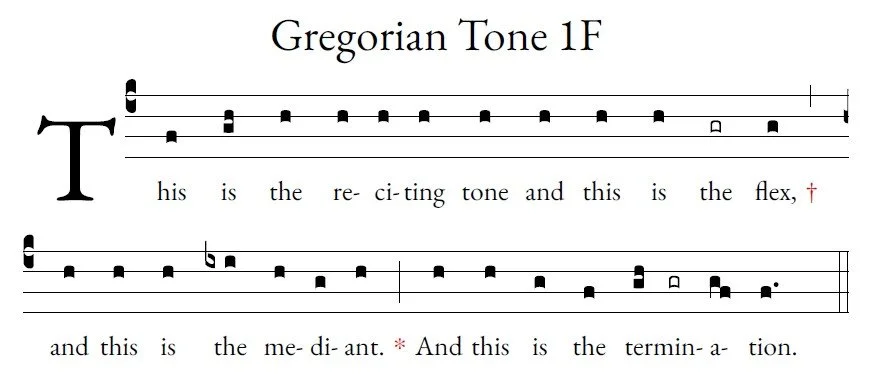
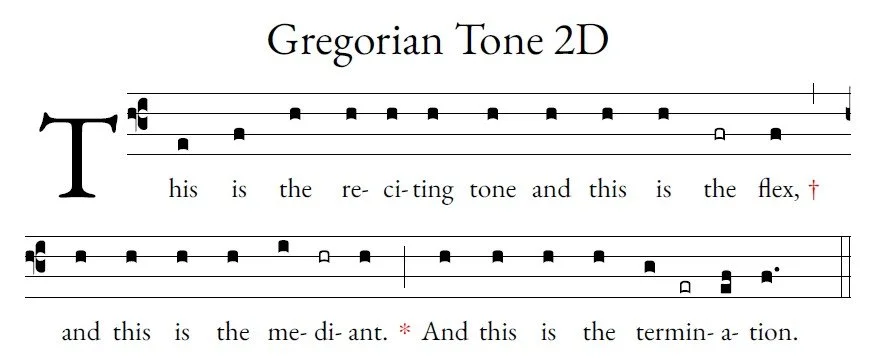
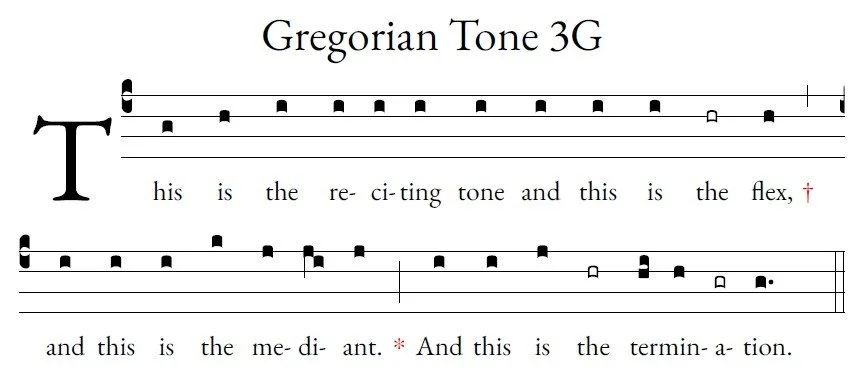
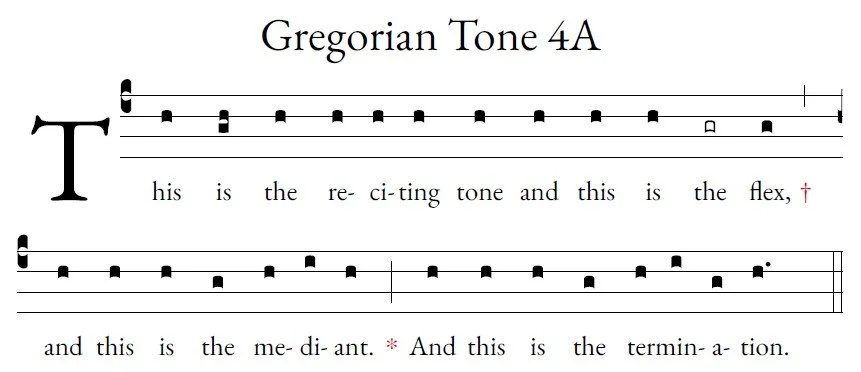
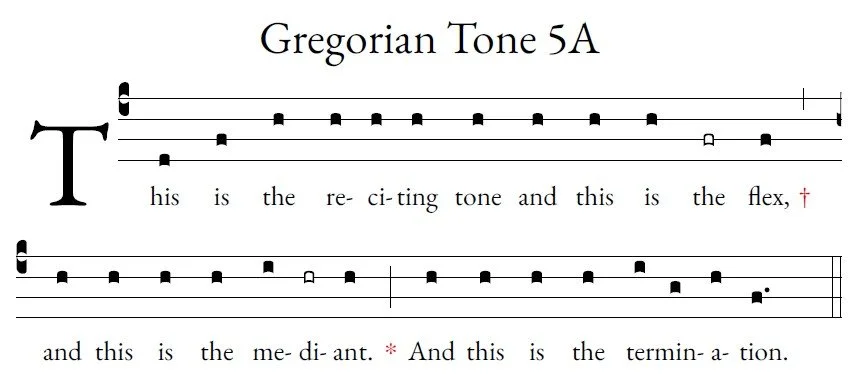
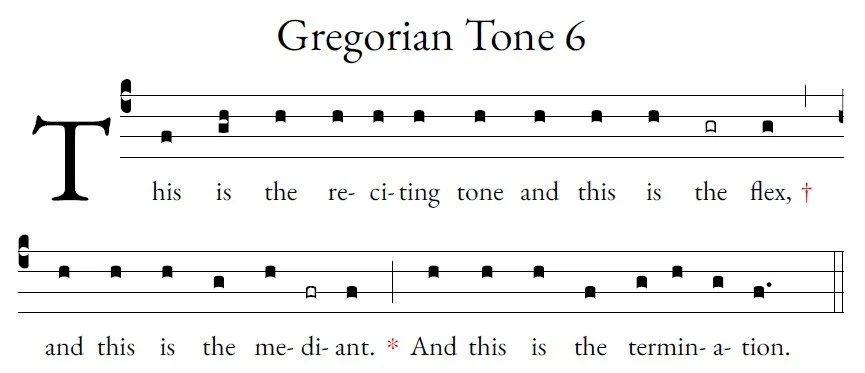
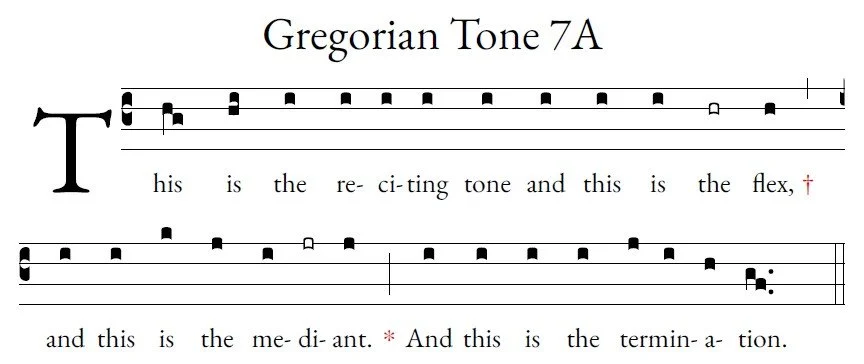
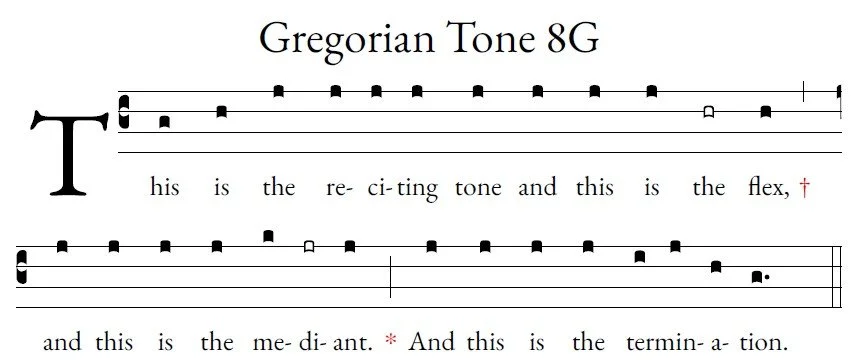
The Tone Peregrinus (AKA The Wandering or Pilgrim Tone) is a tone that is outside of the 8 Gregorian Modes. The Tonus Peregrinus is thus named because it starts with one reciting tone, and then “wanders” down to a second tone.
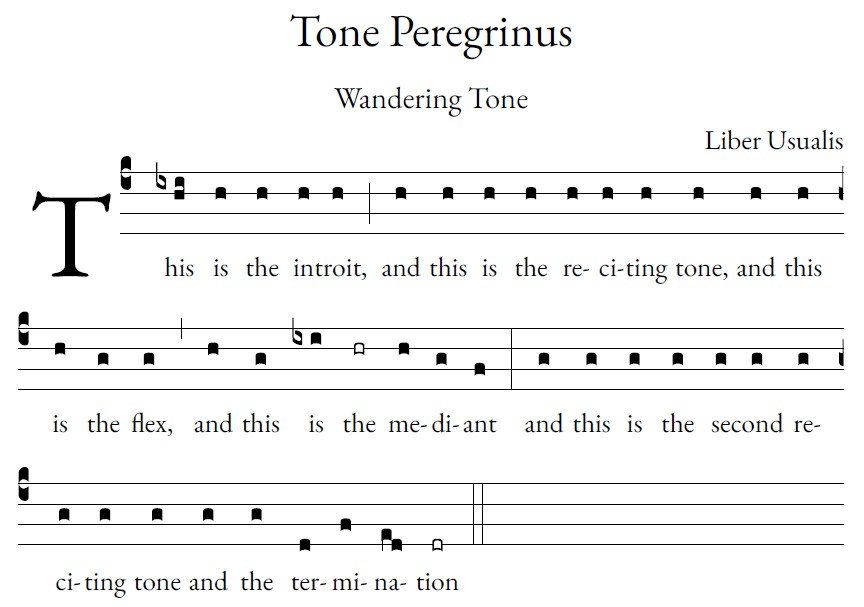
Note that these tones can be adapted for a variety of passages, but it is difficult to sing with very short lines. These tones work best if you choose to sing them in Latin. God bless you!