Chant Notation 101
Students of music are likely familiar with the modern 5-line modern notation with round notes, stems, and time and key signatures. Chant, on the other hand, is written in notation originating from the Middle Ages. This notation was developed for liturgical music and intended for human voices rather than instruments. An important distinction between modern and chant notation is that chant is not tied to set pitches but is relative. This allows for the notation to be adapted to the vocal range of the singer. People who know Solfege (Do re mi…) are already halfway to reading chant! Chant notation is intuitive and quick to read once you understand the basic symbols.

The Stave
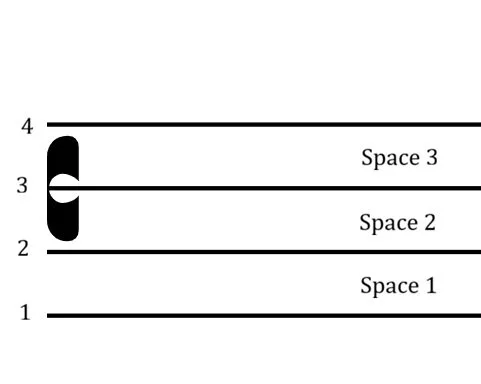
One of the first thing that musicians notice about chant notation is that the stave has only 4 lines instead of the usual 5. The lines of the stave are numbered 1 to 4 from bottom to top.
The Do and Fa clef
There are two types of clefs in chant: the Do clef and the Fa clef. These clefs exist to indicate that there is a half-step below the clef line. The Do clef is the most encountered clef in chant. The symbol is an archaic rendering of the letter “C” and is usually on the 4th line but can also be found on 3rd and 2nd line. The Fa clef is less common and is typically seen on the 3rd line and less commonly on the 4th line. The Fa clef is an archaic rendering of the letter “F”. The position of the clefs can be adjusted as needed to reflect the range of the singers.
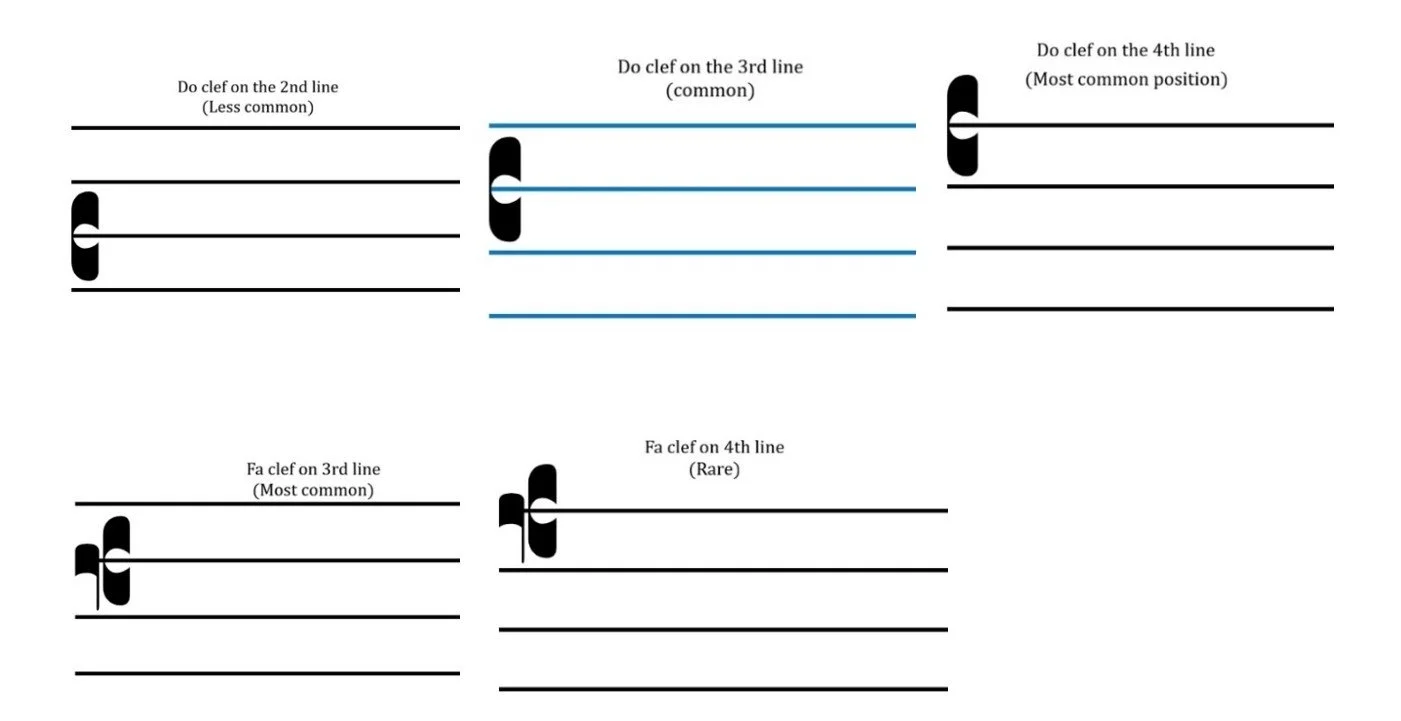
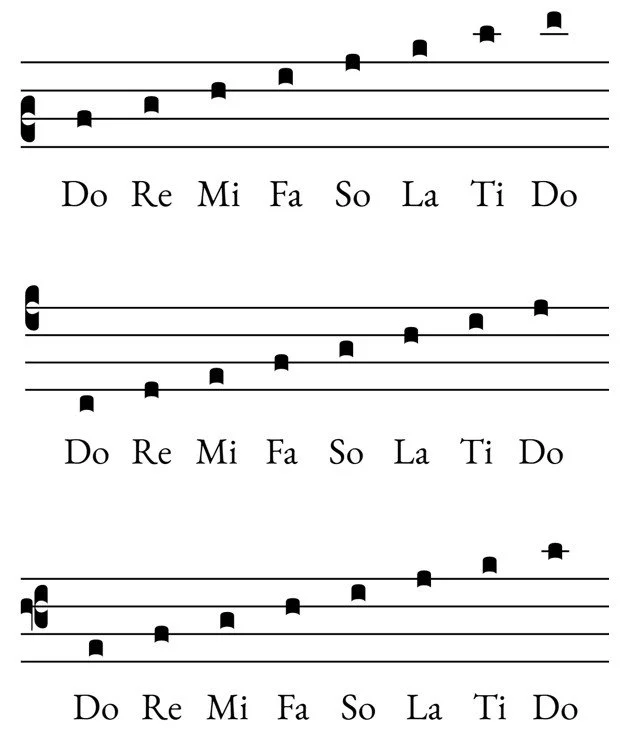
Note how the scale can climb up and down the stave depending on where the clef is located.
The Neumes
Neumes are the precursor to modern round notes and are distinct due to their stemless square shape. The most basic neume is the punctum. Modern notes can be divided into fractions (Whole note = 2 half notes = 4 quarter notes = 16 16th notes), but a punctum is a one-count note that cannot be divided in length.
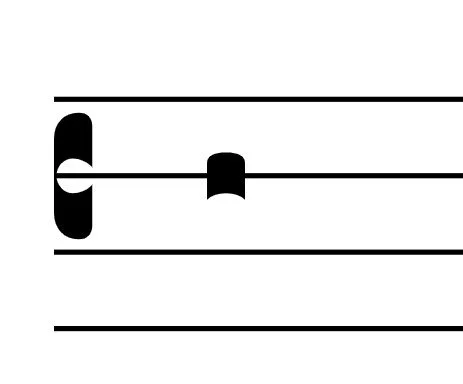
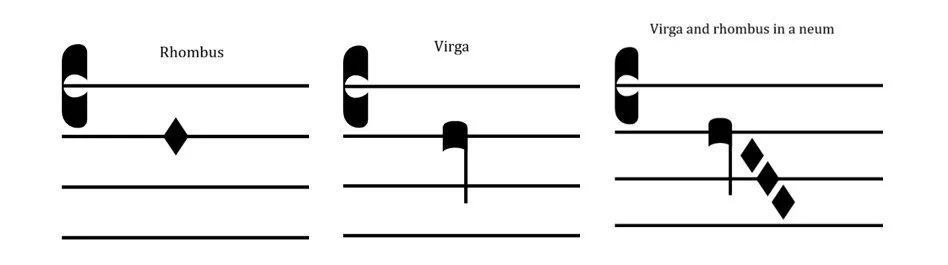
You may sometimes see a variation of the punctum like the rhombus and the virga. These variations have the same length as a punctum and exist because they are just a more convenient way for scribes to write neumes with a quill and pen. The rhombus and virga notation are never alone and are always part of a larger neume structure.
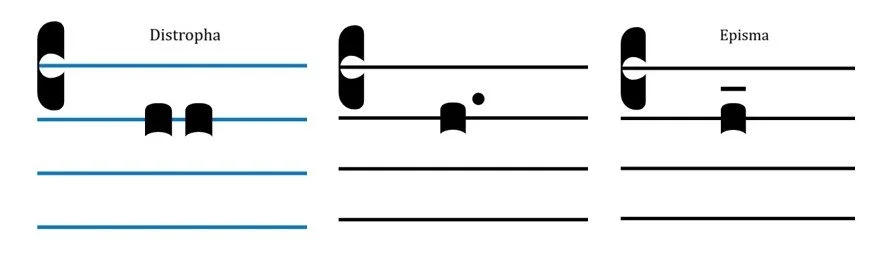
Puncta may be lengthened by several different ways – adding a dot next to the punctum, putting two punctum together (distropha), or adding a line above the punctum (episma). These modifications roughly double the length of the punctum.
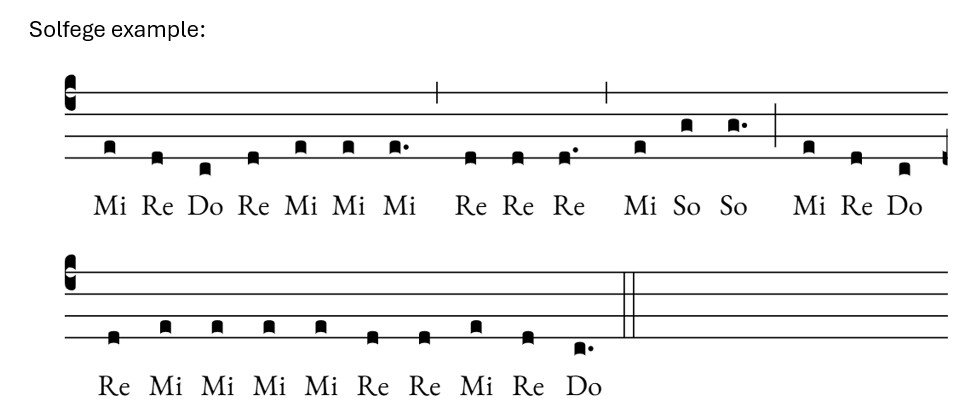
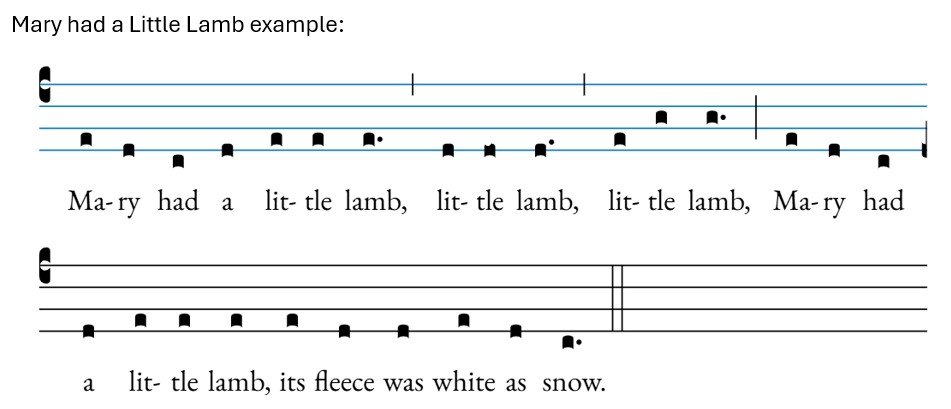
In the above example of “Mary had a little lamb”, each syllable had one punctum. Sometimes in chant, a syllable has a pitch change. This is where ascending and descending neums come in the picture.
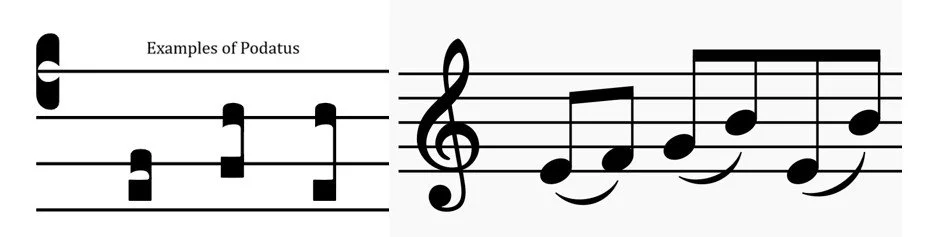
Ascending neums within the same syllable is called a Podatus. This is composed of two puncta – one above the other connected to each other with a line on the right side. When you encounter a puncta above another, you always sing the bottom note and then the top note. Below is an example of podatus and the rough modern equivalent.
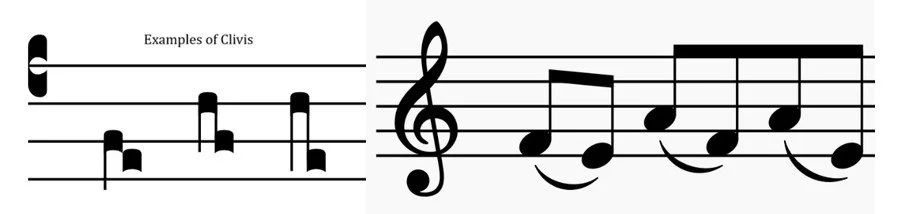
A descending neum is called a Clivis. This is more intuitive and looks like a descending steps. Start with the top note (top of the stairs) and sing the bottom note.
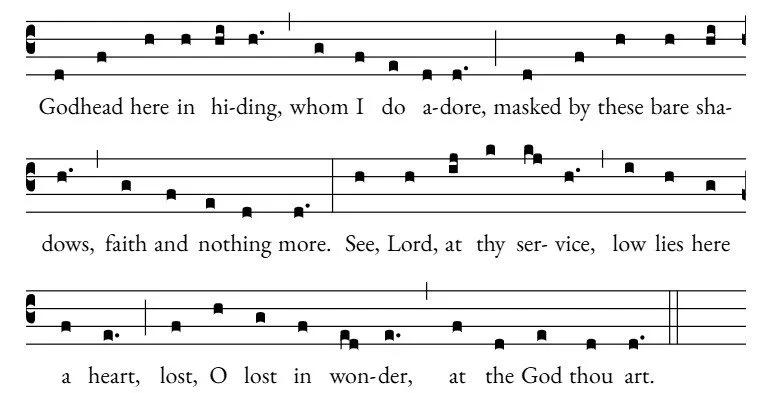
Below is the first verse of the hymn, “Godhead Here in Hiding”. Note the use of the clivis and podatus.
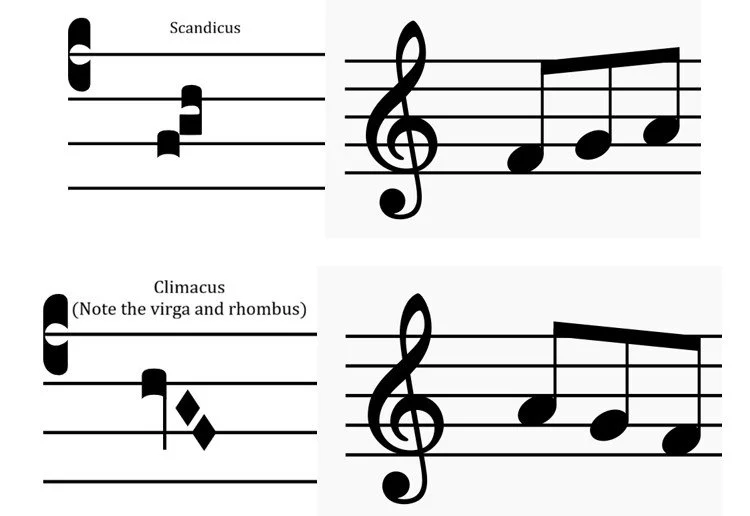
Sometimes you have a syllable that ascends or descends more than two notes. Ascending is called a Scandicus, and descending is called a climacus.
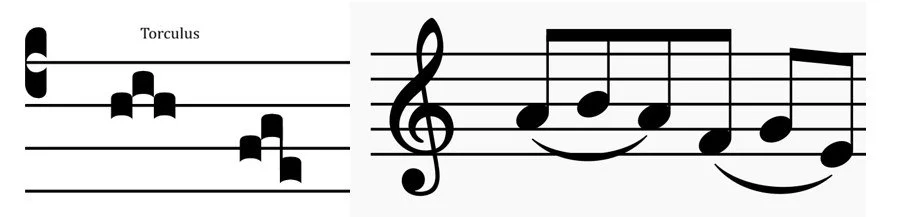
When the second note in a syllable is higher than the other notes, a Torculus is used. It resembles a step pyramid and is intuitive to follow.
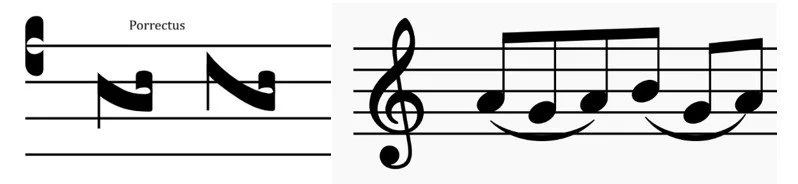
When the second note in a syllable is lower than the other notes, a Porrectus is used. It resembles a slide with a punctum at the end. Sing the note at the top of the slide, sing the note at the bottom of the slide, and then sing the punctum above it. This unusual looking neume exists because of convenience – it was easier for scribes to make a swoosh than it was for them to write out three individual neumes.
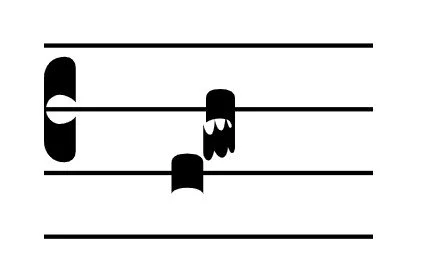
The Quilisma is a neume that looks like a squiggly “w”. The note prior to the quilisma is lengthened slightly.
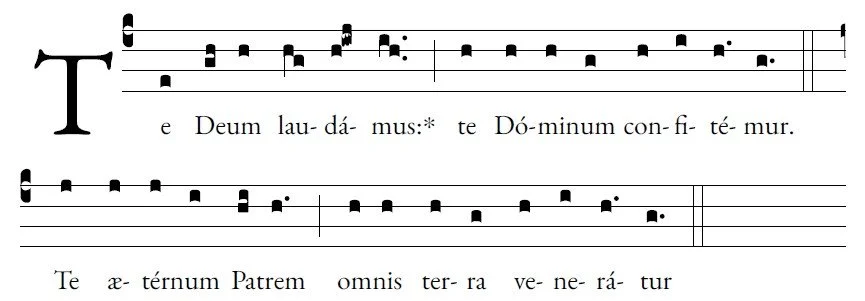
Below is the first two verses of the hymn, Te Deum. Note the quilisma on the word, “Laudamus”.
Barlines
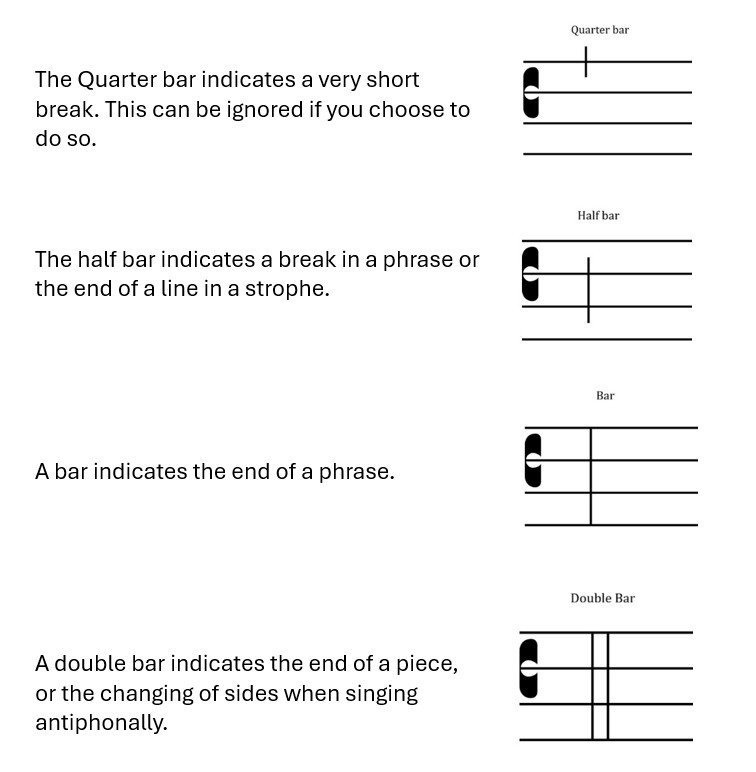
Because chant is not metered, the barlines do not function like measures in modern notation. Barlines are often understood to be natural pauses and breaks in speech and they are typically paired with colons, commas, and periods. There are four types of barlines: The quarter bar, half bar, bar, and double bar.
Guide
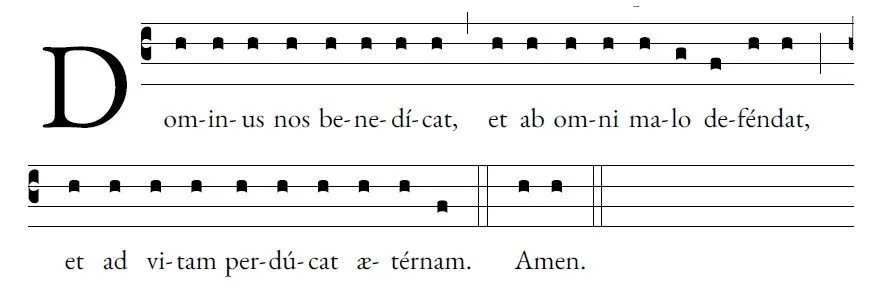
A guide is a symbol that appears at the end of a line. It looks like a punctum cut in half and indicates what the next note on the next line is. The example below is the conclusion of night prayer. Note the guide at the end of the first line.
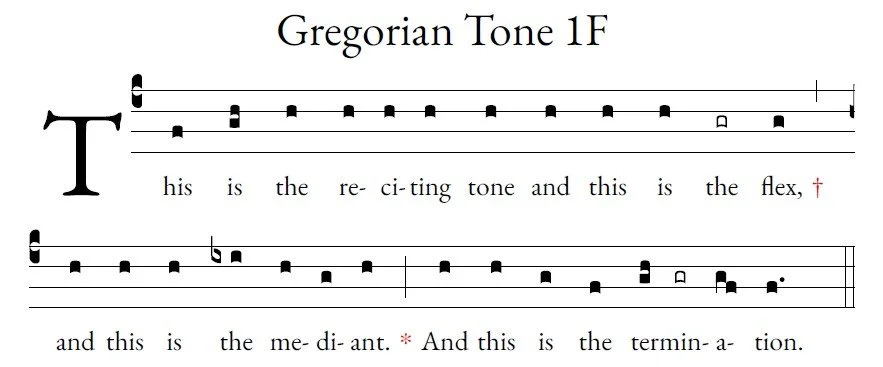
Flat – there is only one flat note in chant - the B-flat! (Ti). When a flat appears in chant notation, it applies only to the note indicated. Gregorian Tone 1F has an example of where a flat would be. Notice that it is in the space under the Do clef line.
Remember that chant is not metered and there are no regular beats! Chants is meant to have a flow that follows a natural pattern of speech. Chant is just speech that is elevated to prayer!
Below is the hymn, Ave Verum Corpus. Look at it and see what you can apply!
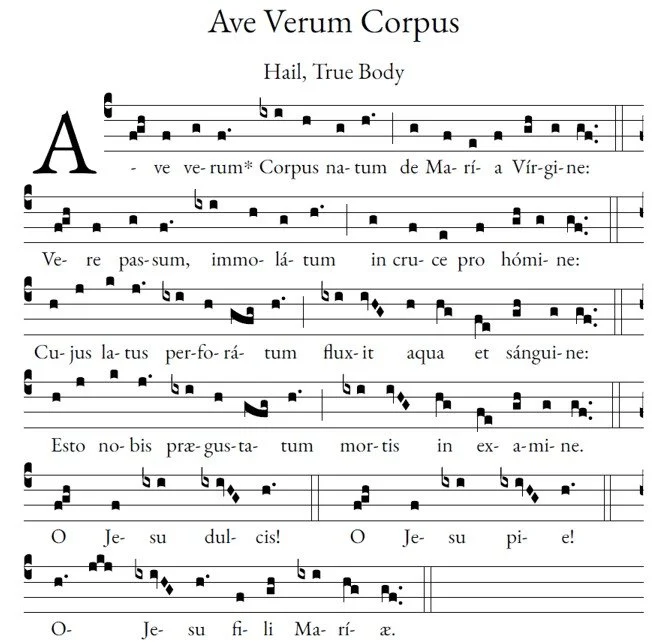
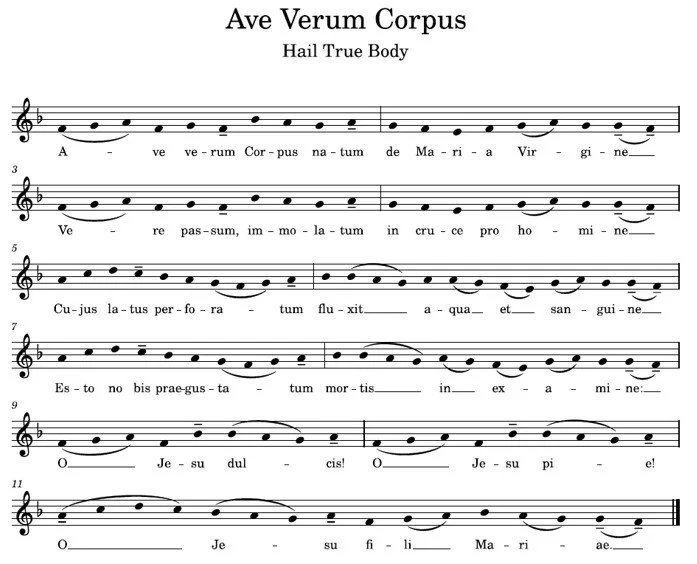
Hail, true Body, born of the Virgin Mary,
truly suffered, sacrificed on the cross for mankind,
from whose pierced side flowed water and blood:
Be for us a foretaste [of the Heavenly banquet] in the trial of death!
O sweet Jesus, O holy Jesus,
O Jesus, son of Mary.