Praying with Beads
The Divine Office and its Jewish predecessor (Tefilla) have been a cornerstone of Christian worship. Since the Apostolic Church, the Psalms have been the breath that animated the liturgy. To chant the Psalms, however, requires Psalters, hymnals, Bibles, and time to study and pray. In a world with limited literacy, no industrial printing, and demanding agricultural labor, full participation in the Divine Office was inaccessible to most Christians.
Devout Christians, still desired to participate in the liturgy, and came up with simple prayer rules and practices to participate in the prayers of the Church.
The Jesus Prayer and the Chotki
The first major movement of Christian monasticism occurred in the 4th Century Egyptian desert. These early desert monks, known collectively as the Desert Fathers, retreated from the world to seek God in the wilderness. One of the great desert monks, St. Pachomius, instituted his famous prayer rule that could be used by monks who were lacking liturgical books. The rule involved a series of prayers to the Holy Trinity, the recitation of Psalm 51, and 100 Jesus prayers. According to pious tradition, St. Pachomius was given this rule by an angel and instructed to teach his brothers to pray at each hour of the day and night. The Jesus prayer is as follows:
“Lord Jesus Christ, Son of God, have mercy on me, a sinner.”
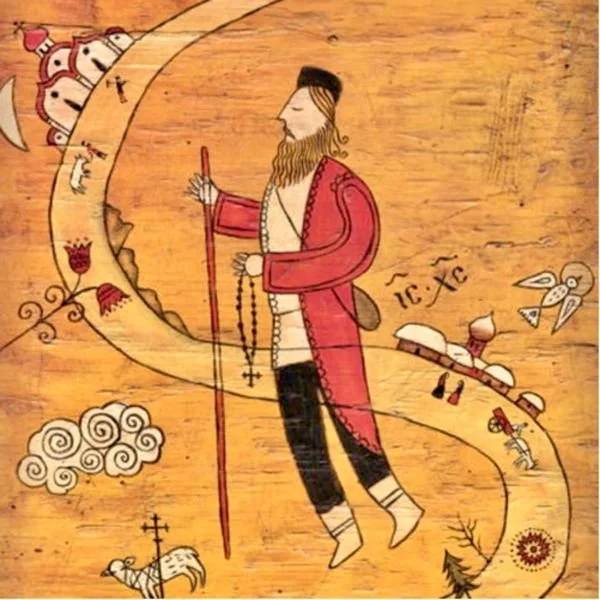
The Jesus Prayer is still prayed by Orthodox Christians and Eastern Catholics. To keep track of the recitations, a prayer rope is used. This rope is known as a chotki or a komboskini and is composed of either knots or beads.
Pater Noster Beads and the Marian Psalter
During the Middle Ages, monasteries became the center for educational, economic, and social life. Christian monks maintained a strict schedule of prayer throughout the day and night and these elaborate liturgies involved ancient hymns, chants, prayers, and the Psalms. Many laypeople were enthusiastic in joining the monastic liturgy, but the demands of daily life, the scarcity of liturgical books (including the Bible!), and lack of training in music made this difficult. Popular devotions began to develop that would create the Rosary.
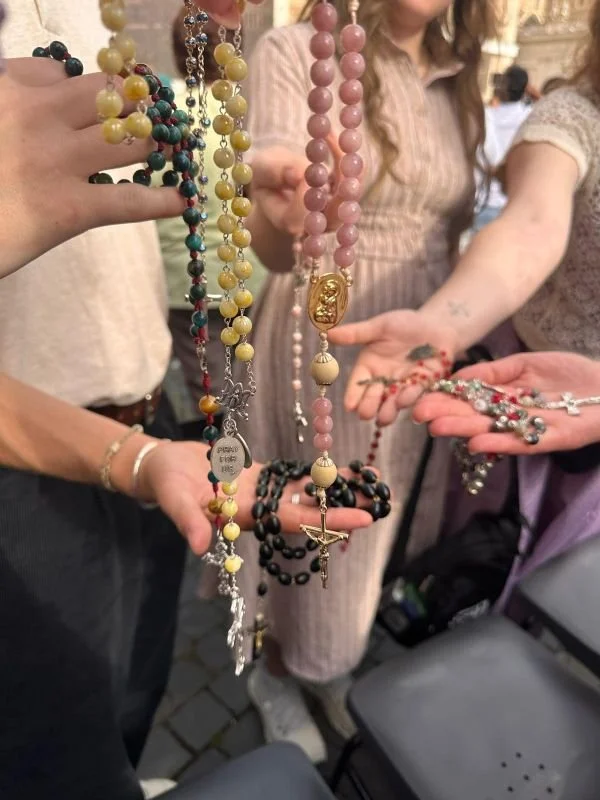
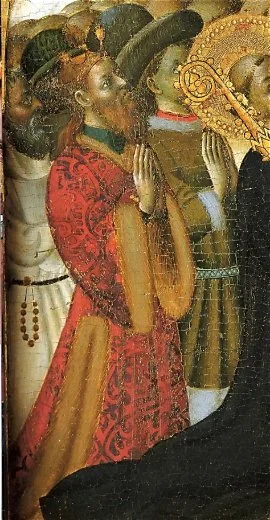
The Pater Noster beads come from the Latin words for “Our Father” (Matthew 6:9-13). Lay Cistercians and Carmelites who could not recite all 150 Psalms with the monks would sometimes take up a private devotion of praying 150 “Our Father” prayers to pray with the monks. There we no standard Pater Noster beads, and they appeared in many variants, styles, and materials.
As time went on, a similar Marian devotion was developed. Instead of using the beads to pray 150 Pater Nosters, the beads were used to pray 150 Hail Mary prayers (Luke 1:28, 42). This devotion came to be known as the Marian Psalter.
The Dominican Rosary
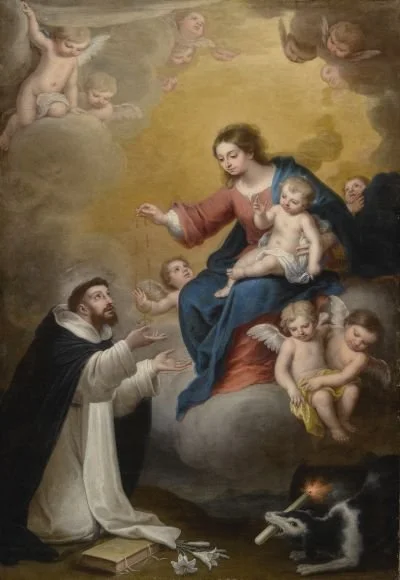
During the Cathar heresy and subsequent Crusade from 1209-1229, the Church was in disarray due to a Gnostic heretical movement in Southern France. According to pious tradition, St. Dominic de Guzman OP received a vision from St. Mary at a Church in Prouille in which she handed him the Rosary as a means of preaching orthodoxy and combatting heresy. As the Rosary developed, the devotion was grouped around praying 10 Ave Marias for each of the 15 “Mysteries” or moments in Christ’s life. This continued the practice of praying 150 prayers in place of the 150 Psalms.
Since the Middle Ages, the Rosary has become one of the most prominent Catholic prayers and has been used for evangelization and spiritual warfare across the world. For more information about the Rosary, you can visit the Rosary Confraternity website linked below.
Rosary Center & Confraternity — Rosary Center & Confraternity
Although these prayers have liturgical origins, they are private devotions and do not fulfil a priest’s obligation to pray the Office. They are, however, a spiritually rich and highly accessible way for the Christian laity to meditate on the mysteries of Christ and join the entire Church in prayer.