How to Chant the Readings
The Liturgy of the Hours is inherently musical in nature – a nature which is reflected in the singing of the hymns, Psalms, and canticles. In addition, the prayers and readings can also be set to music. Every hour of the Divine Office includes a reading from the Bible that follows the psalmody. The tones for chanting the readings can be found in the Antiphonale Romanum and contains the musical tones for the ordinaries of the Liturgy and the chant tones for the readings.
Chant Patterns
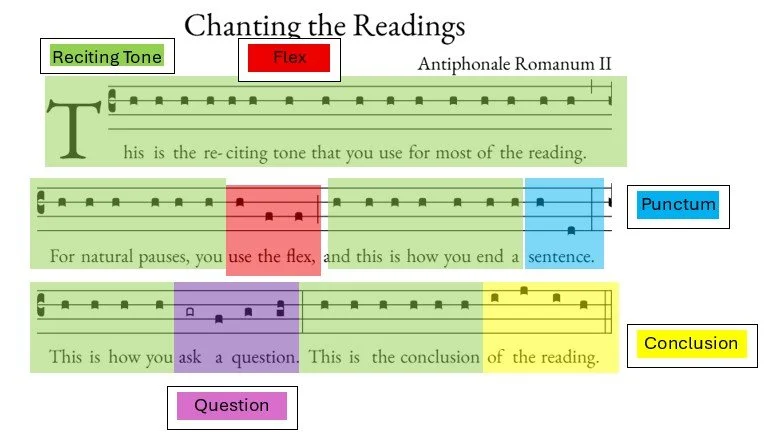
The chants for the readings have five chant patterns that correspond to the natural pauses and inflections of speech. The five patterns are as follows:
· Reciting Tone – The note used to chant most of the reading.
· The Flex – Used for natural pauses in speech like commas and semicolons. Cantors may use their discretion on when it is appropriate to use a flex.
· The Punctum – Used for the conclusion of a sentence. At the Cantor’s discretion, a punctum may also be used in place of the conclusion.
· The Conclusion – Used for the ending of the reading.
· The Question tone – Used for questions in the reading.
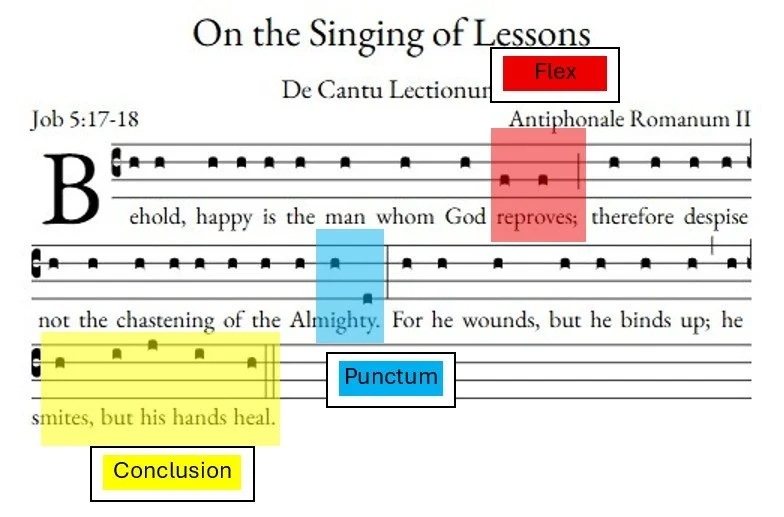
Included below is an excerpt from Job ch. 5 that uses the tones for the reading.
Chanting Questions
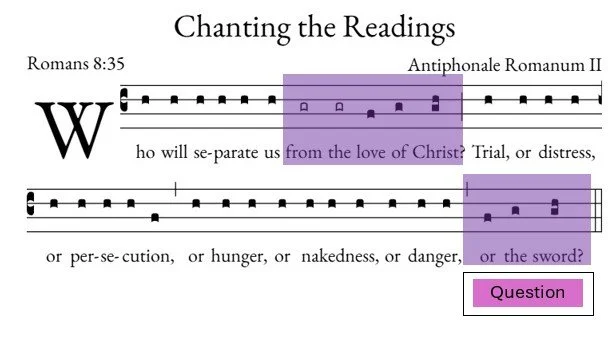
For readings that contain questions, the questions are chanted in the following manner:
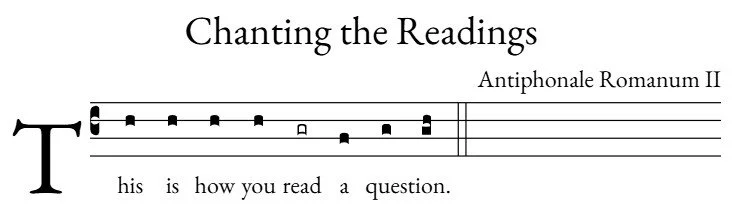
Listed below is an excerpt from Romans ch. 8 that shows two variations of the interrogative chant. The choice of variation can be made at the Cantor’s discretion.
Final Example
The following reading is from Corpus Christi evening prayer I.
“Is not the cup of blessing we bless a sharing in the blood of Christ? And is not the bread we break a sharing in the body of Christ? Because the loaf of bread is one, we, many though we are, are one body, for we all partake of the one loaf.” – 1 Corinthians 10:16-17
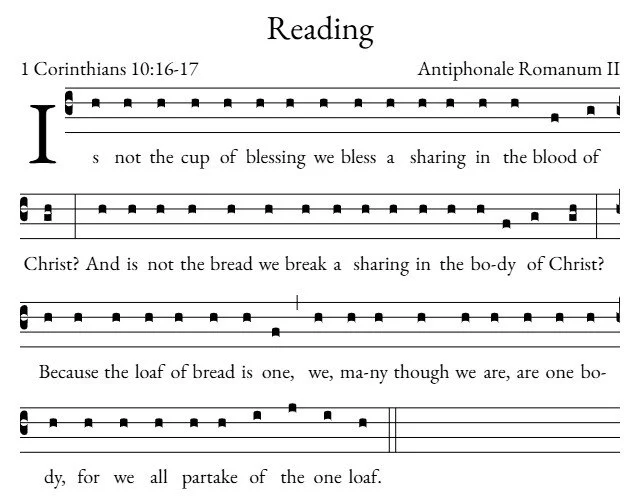
Remember that you can adjust the flexes and puncta to fit your natural pattern of speech. Have fun and pray well. God bless you.